Key takeaways
- Mobile capture, tag-to-work-order and IoT-triggered work orders put every pillar's routine on one equipment list.
- MaintWiz AI agents watch your records and propose what needs attention; your people approve.
- Training records, 5S audits and pillar dashboards keep leadership review on current figures.
- MaintWiz, an AI CMMS built for TPM, carries each pillar's digital routine on one equipment list: mobile capture, tag-to-work-order, IoT-triggered work orders, ePTW, 5S, OEE, Kaizen and OPL, rolled out in 6 to 8 weeks.
TPM 4.0
What is TPM 4.0, and how is a digital transformation different from TPM software?
'TPM 4.0' is used for TPM combined with Industry 4.0 technologies such as sensors, connectivity and analytics, with people's involvement still central. The word 'digital' adds tools, not a different method. JIPM, the Japan Institute of Plant Maintenance, proposed TPM in 1971; digital TPM runs the same pillars on one system.
A transformation is the change programme around those tools: what to digitise first, what data must be right, who owns it and what stays manual. The software holds the routines and records that every pillar's digital tools depend on (Figure 1).
Layers of a digital TPM system
Most of the value comes from the first two layers being reliable
Capture
Operator entries on a phone, machine counts and stop signals, sensor readings, audit scores
Records
Asset register, tags, work orders, losses, training records
Analysis
OEE roll-up, loss Pareto, tag ageing, PM compliance, audit trend
Action
Tag assignment, work orders, improvement projects, alerts
Integration
ERP and stores, MES and SCADA where they exist
 maintwiz.comAI CMMS built for TPM
 WhatsApp us
 +91 93459 29168
 Book a demo
Where does TPM software sit in a digital transformation?
Software is the record layer that sensors, tags and dashboards depend on. MaintWiz delivers it as an AI CMMS built for TPM, with a module and dashboard for each pillar on one equipment list (TPM software) (Figure 3).
From the floor to the pillar dashboards
IoT signals can create work orders automatically
- Mobile capture
- Terminals
- IoT sensors
- PLC, SCADA, MES
Events and rules
- Tags and records
- Work orders
- Losses and audits
Dashboards by pillar
IoT signal creates the work order
SAP PM and MM via web services
Single sign-on
Excel template upload
maintwiz.comAI CMMS built for TPMWhatsApp us+91 93459 29168Book a demoDownloads
Digital TPM guide, readiness workbook and software scorecard
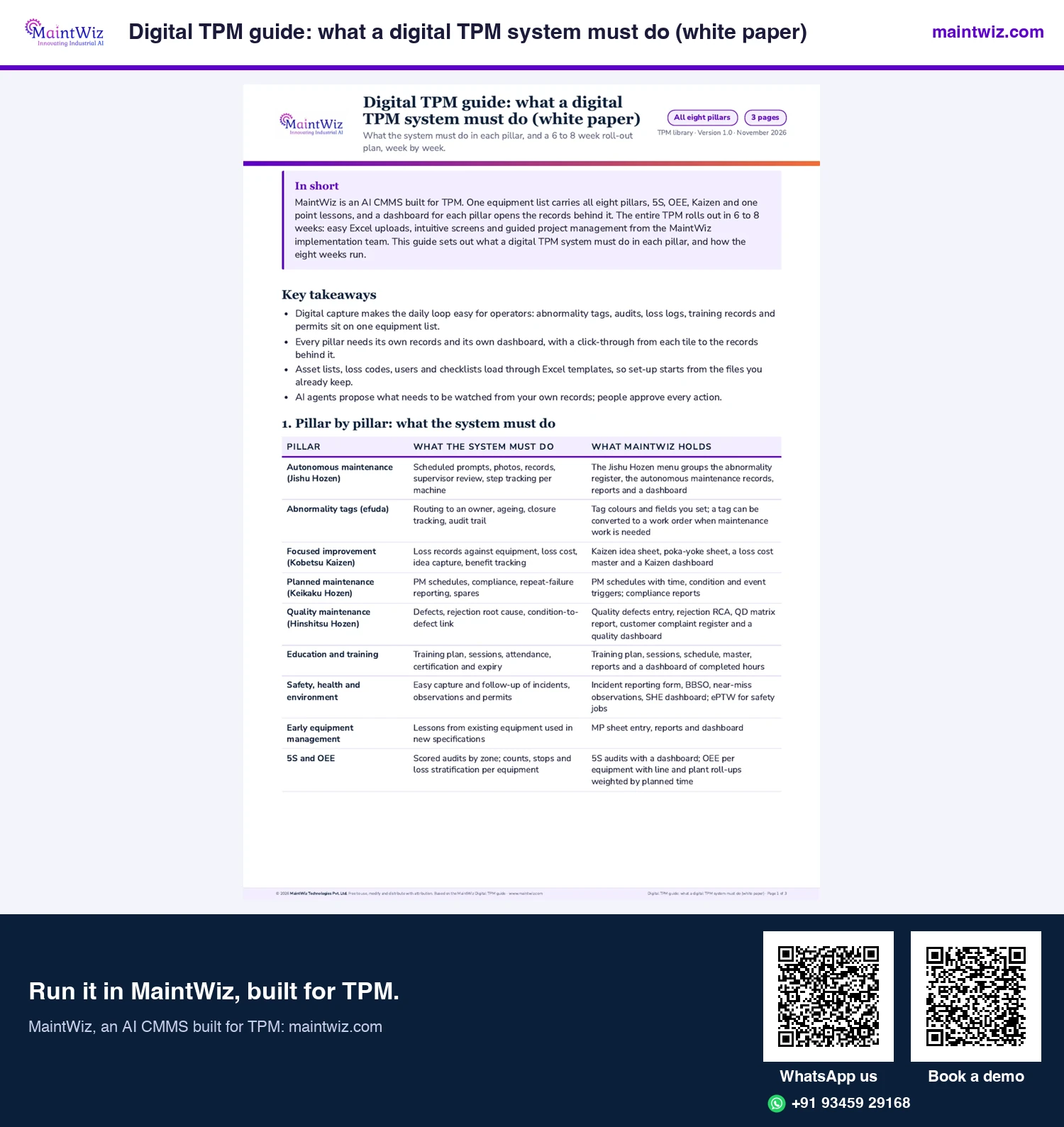
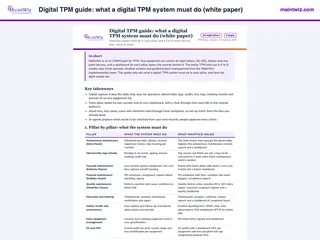 PDFDigital TPM guide: what a digital TPM system must do (white paper)
What a CMMS must hold for each TPM pillar, and how MaintWiz rolls it out in 6 to 8 weeks
- Pages
- 3
- A4
- Created
- 5 November 2026
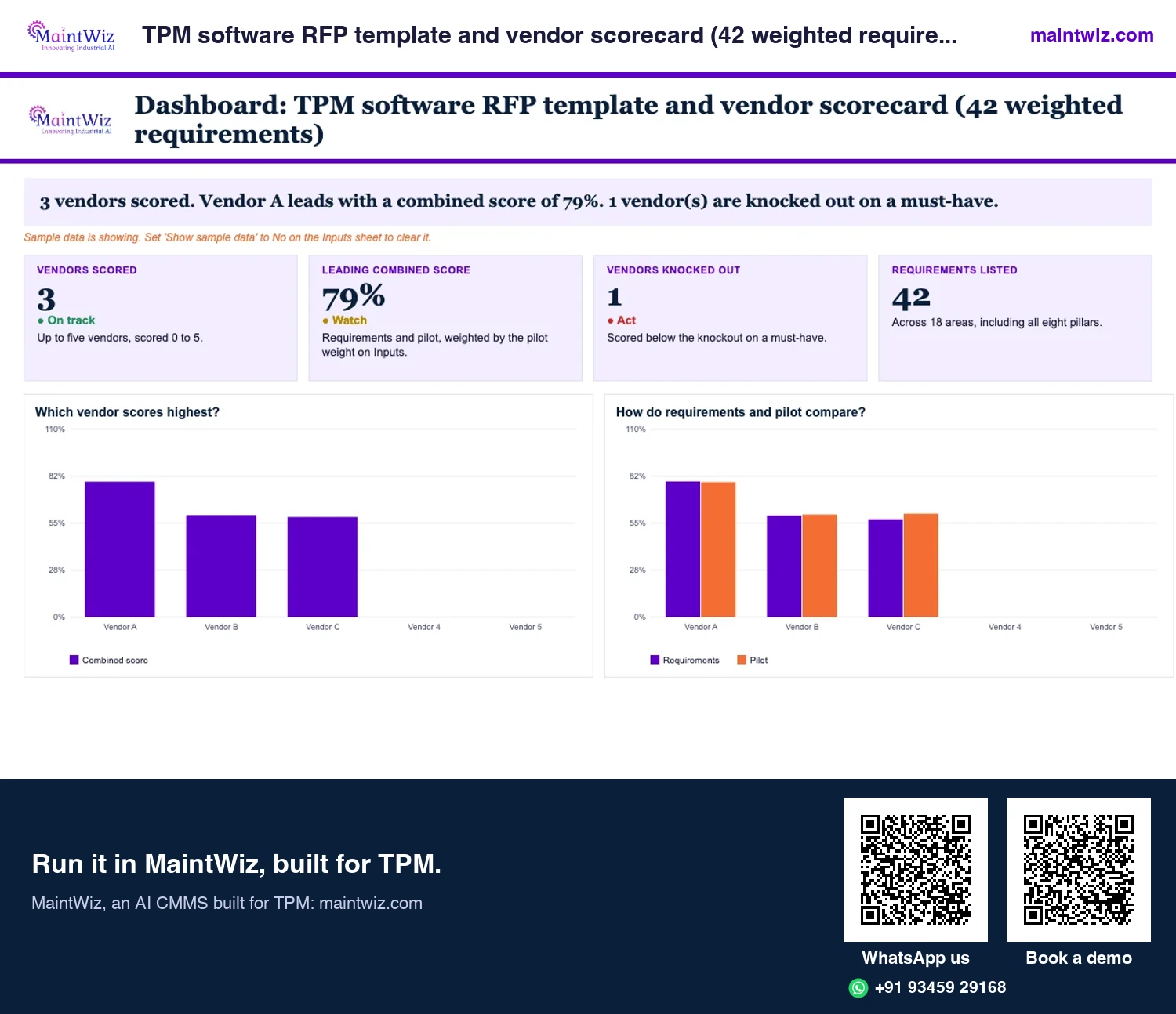
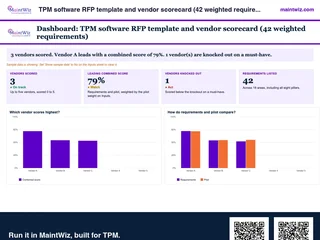 ExcelTPM software RFP template and vendor scorecard (42 weighted requirements)
Weight 42 requirements, score up to five vendors, run a proof of concept on your own equipment list and read a ranked
- Sheets
- Dashboard, Inputs, Scorecard, Pilot scoring, Questions, Proof of concept, Read me
- A4
- Version
- v1.1, 4 November 2026
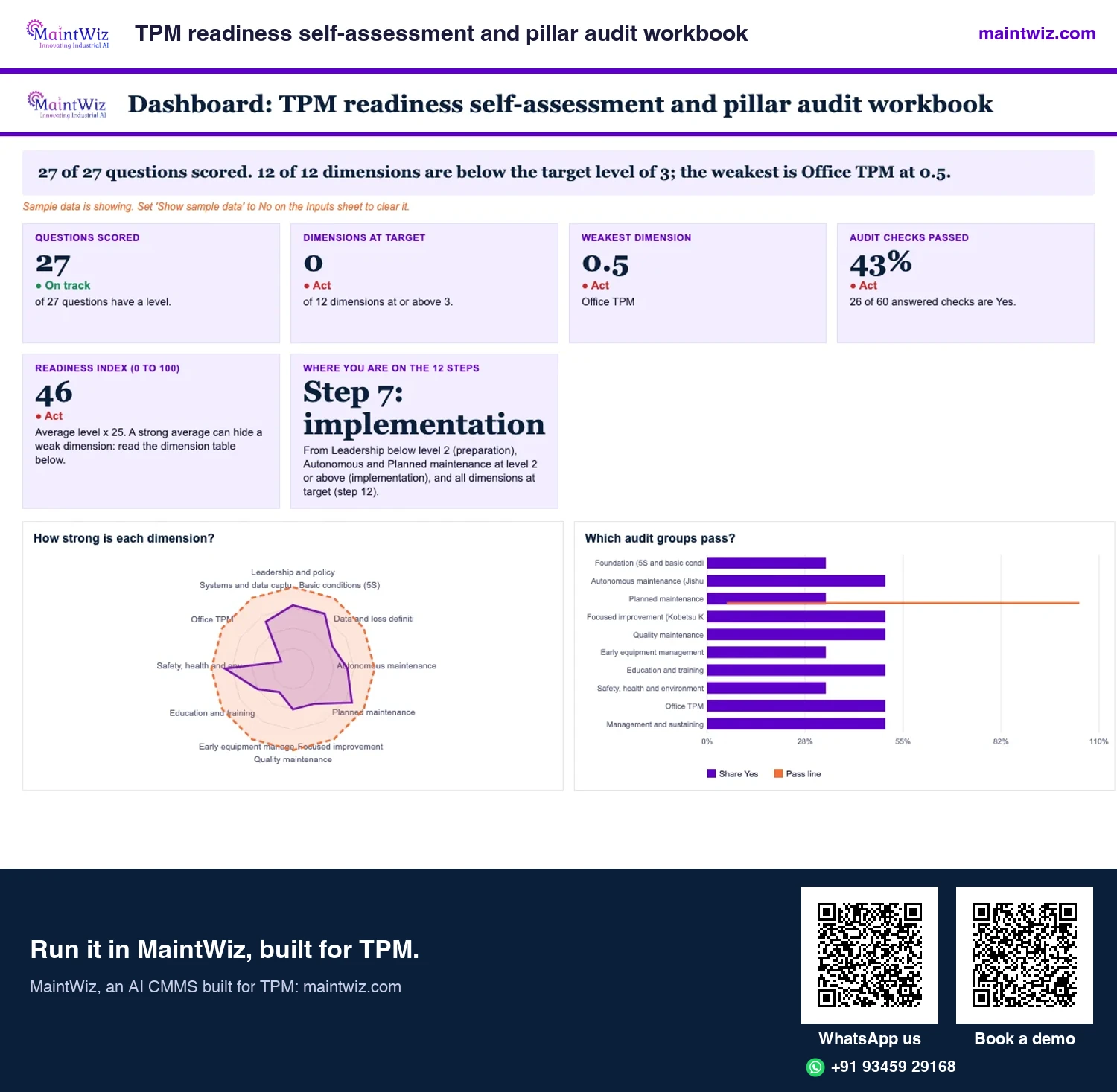
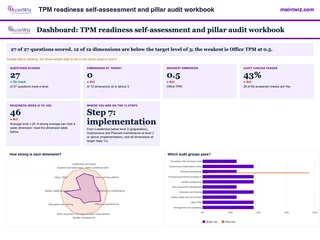 ExcelTPM readiness self-assessment and pillar audit workbook
Score 27 questions across 12 dimensions, read a readiness index from 0 to 100 and your place on the 12 steps
- Sheets
- Dashboard, Inputs, Assessment, Scale, Pillar rubric, Pillar audit, Plant Head page, Read me
- A4
- Version
- v1.0, 2 November 2026
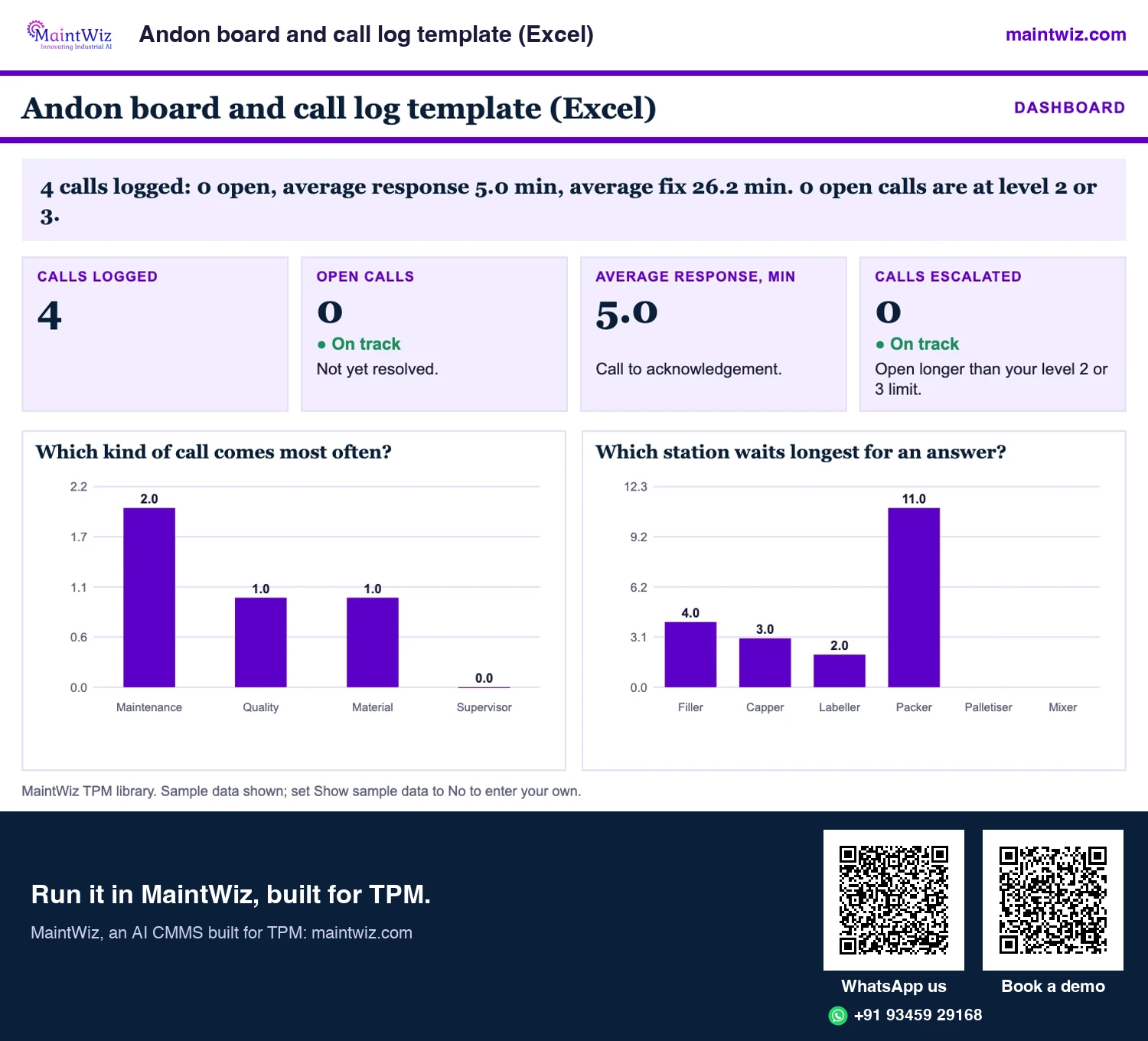
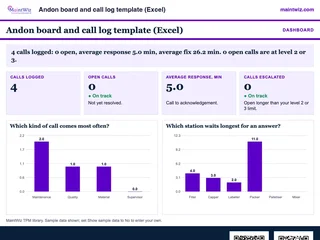 ExcelAndon board and call log template (Excel)
Run an andon line-stop call light with escalation at 10 and 20 minutes, response and fix times
- Sheets
- Dashboard, Inputs, Reason codes, Calls, Board, Board (2 x A4), Results, Read me
- A4
- Version
- v1.1, 5 November 2026
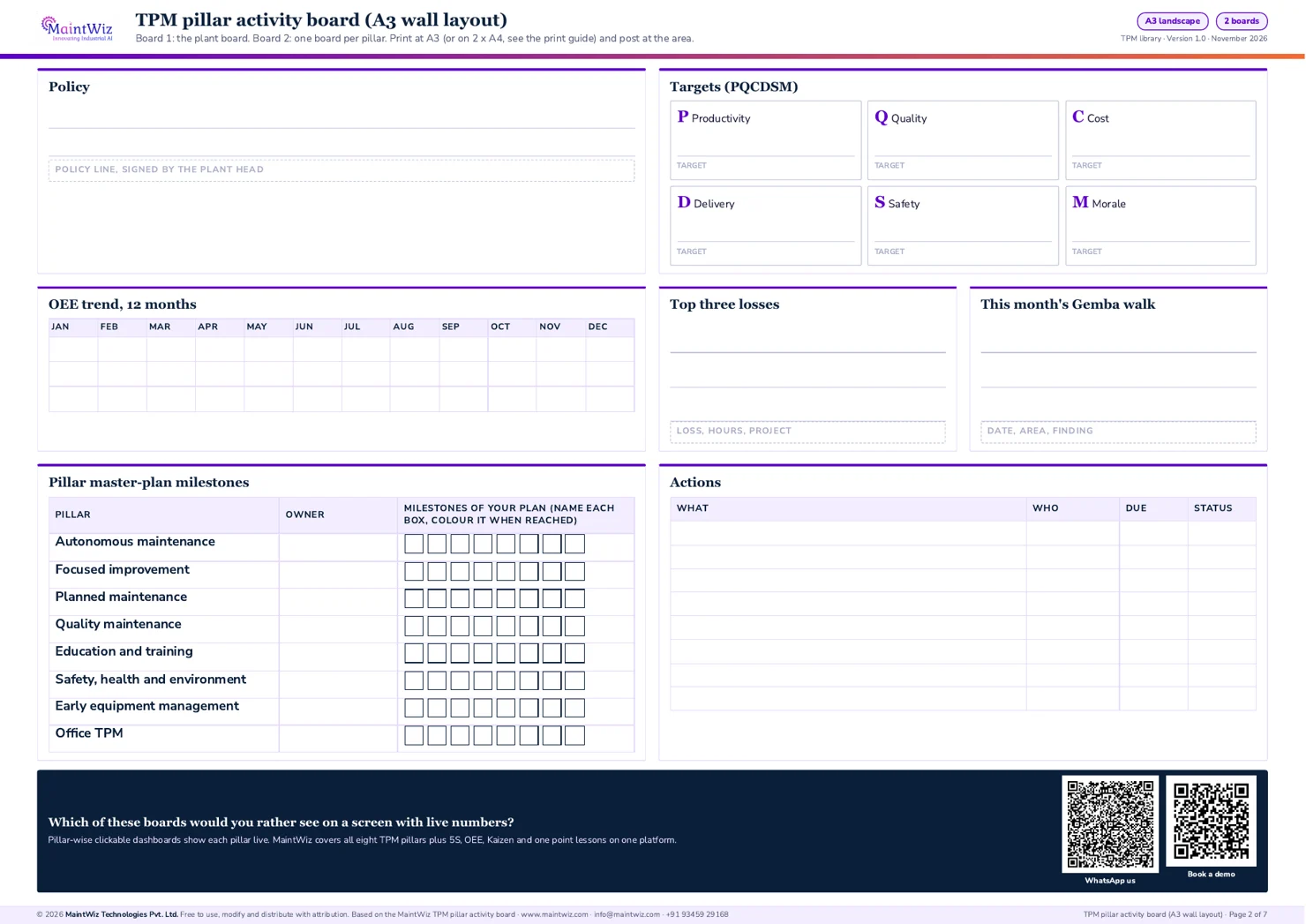
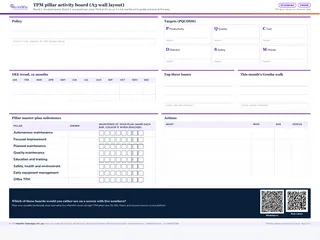 PDFTPM pillar activity board
Post one plant board and one pillar board with PQCDSM targets, the OEE trend, Gemba walk notes
- Pages
- 7
- A3 landscape (2 x A4 version inside)
- Created
- 5 November 2026
By pillar
Where does digital help each TPM pillar?
| Pillar | What digital adds | Where to start | In MaintWiz |
|---|---|---|---|
| Autonomous maintenance | Tags and photos on a phone, owners and dates, closure tracking | One pilot area first: agree tag rules and owners, then give operators a phone tag quicker than paper | Autonomous maintenance software and abnormality register |
| Planned maintenance | Scheduling, work orders, history, compliance reporting; condition data where sensors exist | Scheduling and compliance reporting first; add condition data on assets where an owner and a response are named | Preventive maintenance software, with IoT-triggered work orders |
| Focused improvement | Loss data, project list, results tracking | Loss data and the project list first; the team chooses and leads the fix | Kaizen software and OEE software |
| Quality maintenance | Defect and rejection records linked to equipment | Agree the defect codes, then link rejections to the equipment | Quality defect software |
| Education and training | Plans, records, one point lesson library | Training plans and records first, then the one point lesson library | Training management software and one point lessons |
| Safety, health and environment | Easy capture of near misses and observations | Near-miss and observation capture on a phone, with a named owner for each report | Near miss and BBSO software and ePTW |
| Early equipment management | MP sheets in front of designers at design time | Put MP sheets in front of designers at the start of each new equipment project | Early equipment management software |
| Office TPM | Workflow and approval routing | Map the loss first, then route the workflow and approvals | An office TPM view with its own dashboard of tag records |
Sensors, AI and dashboards add speed once a routine and an owner exist, so start where they do.
A data and system architecture for digital TPM
| Layer | What it does | Examples of what it holds |
|---|---|---|
| Capture | Records what happens | Operator entries on a phone, machine counts and stop signals, sensor readings, audit scores |
| Records | Stores it by equipment and time | Asset register, tags, work orders, losses, training records |
| Analysis | Turns records into views | OEE roll-up, loss Pareto, tag ageing, PM compliance, audit trend |
| Action | Routes work to an owner | Tag assignment, work orders, improvement projects, alerts |
| Integration | Connects to other systems | ERP and stores, MES and SCADA where they exist |
MaintWiz keeps capture and records on one equipment list, so every analysis reads the same records.
What do mobile tags add?
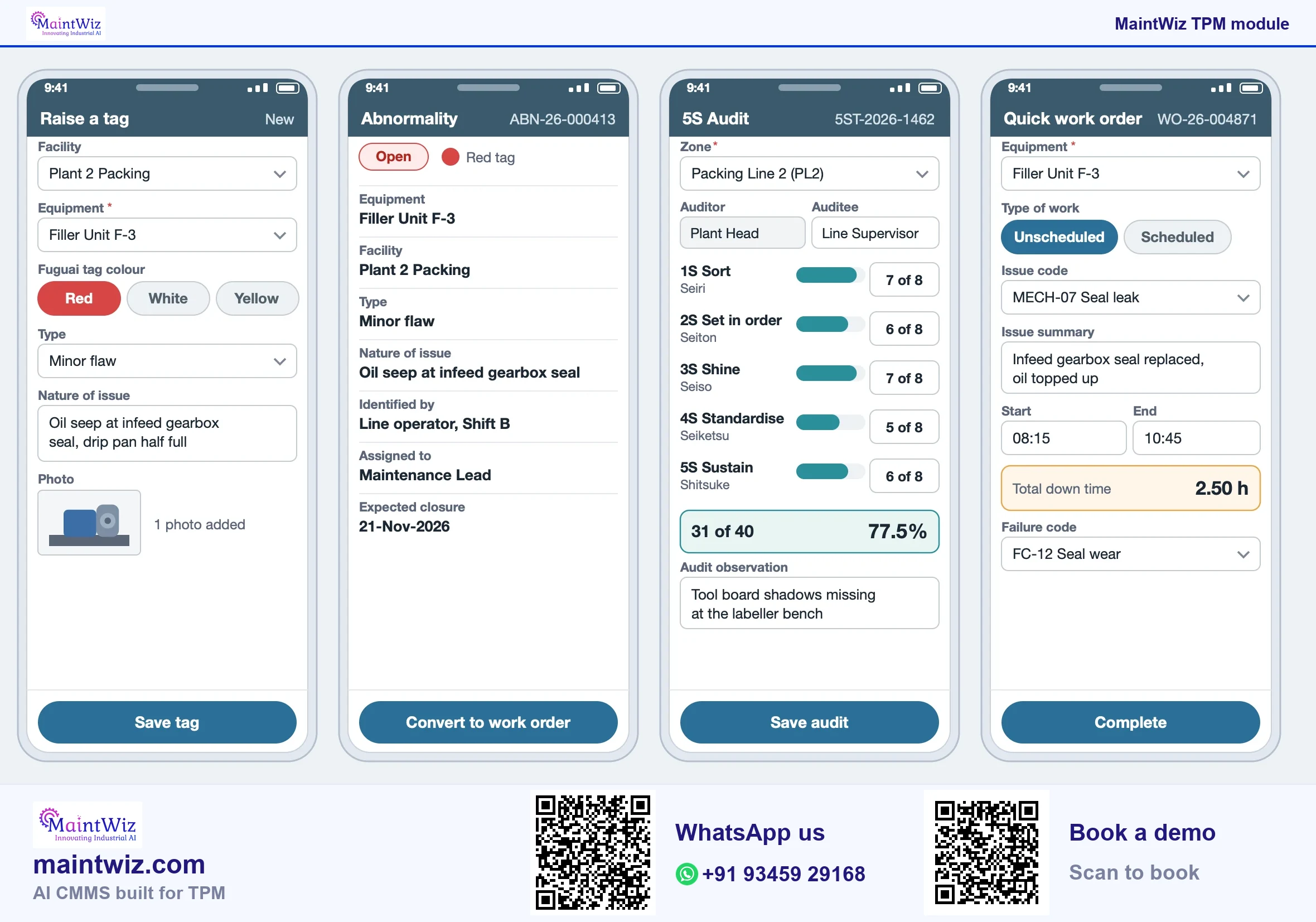
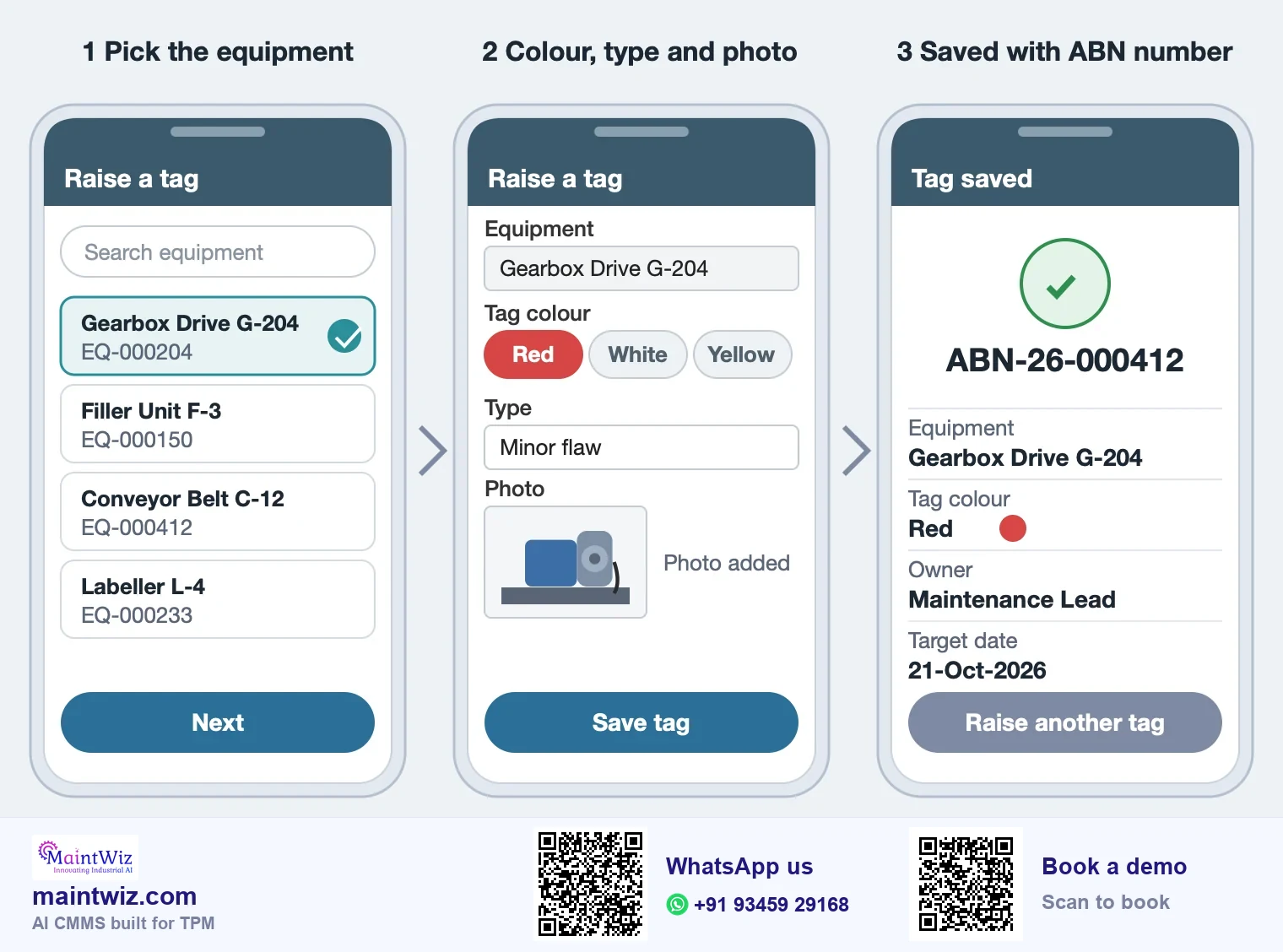
This is where most plants see the first practical value: operators record inspections and abnormalities at the equipment, the record is assigned to an owner with a target date and tracked to closure. See abnormality management software and autonomous maintenance software.
Digital TPM boards and activity boards
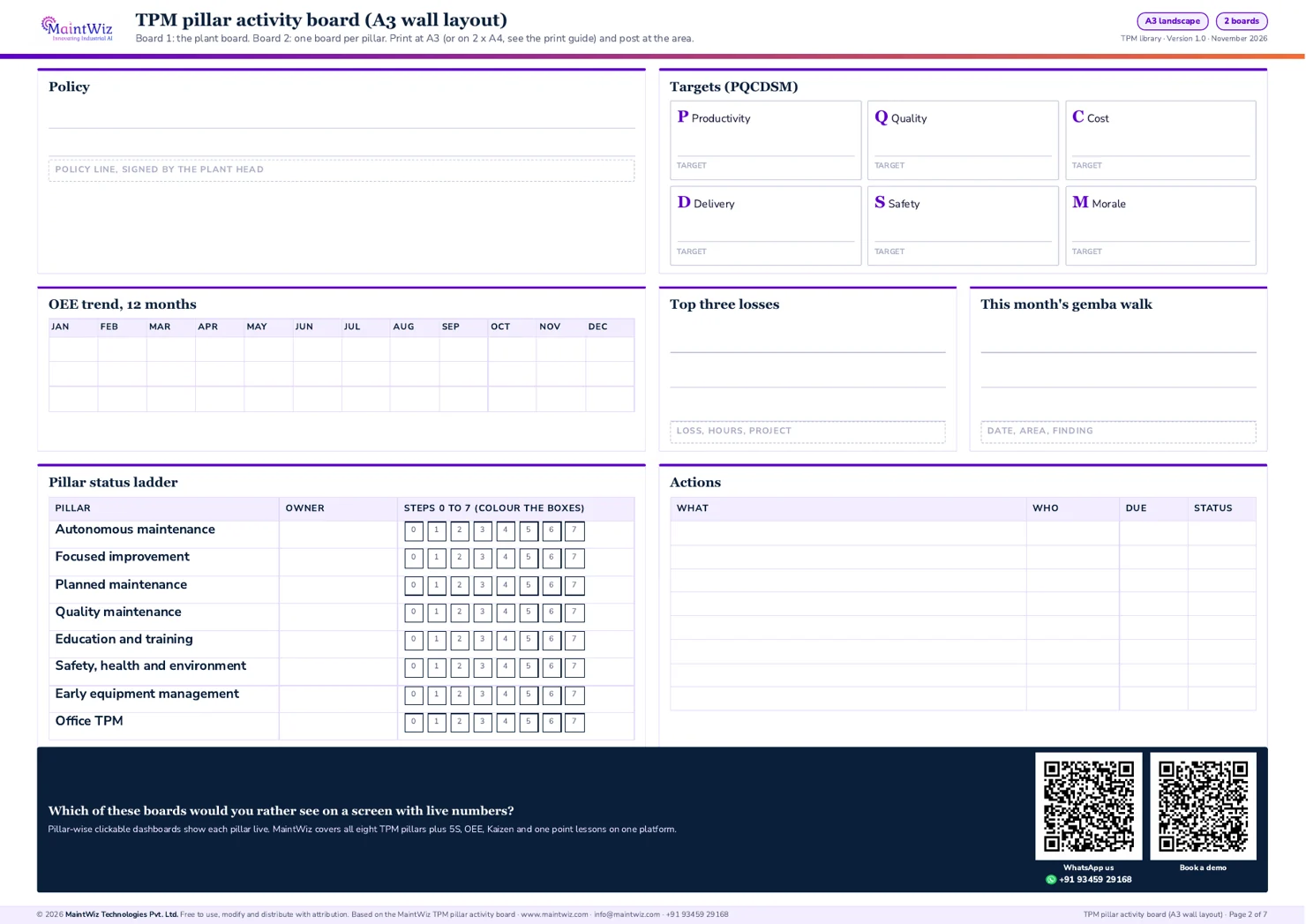
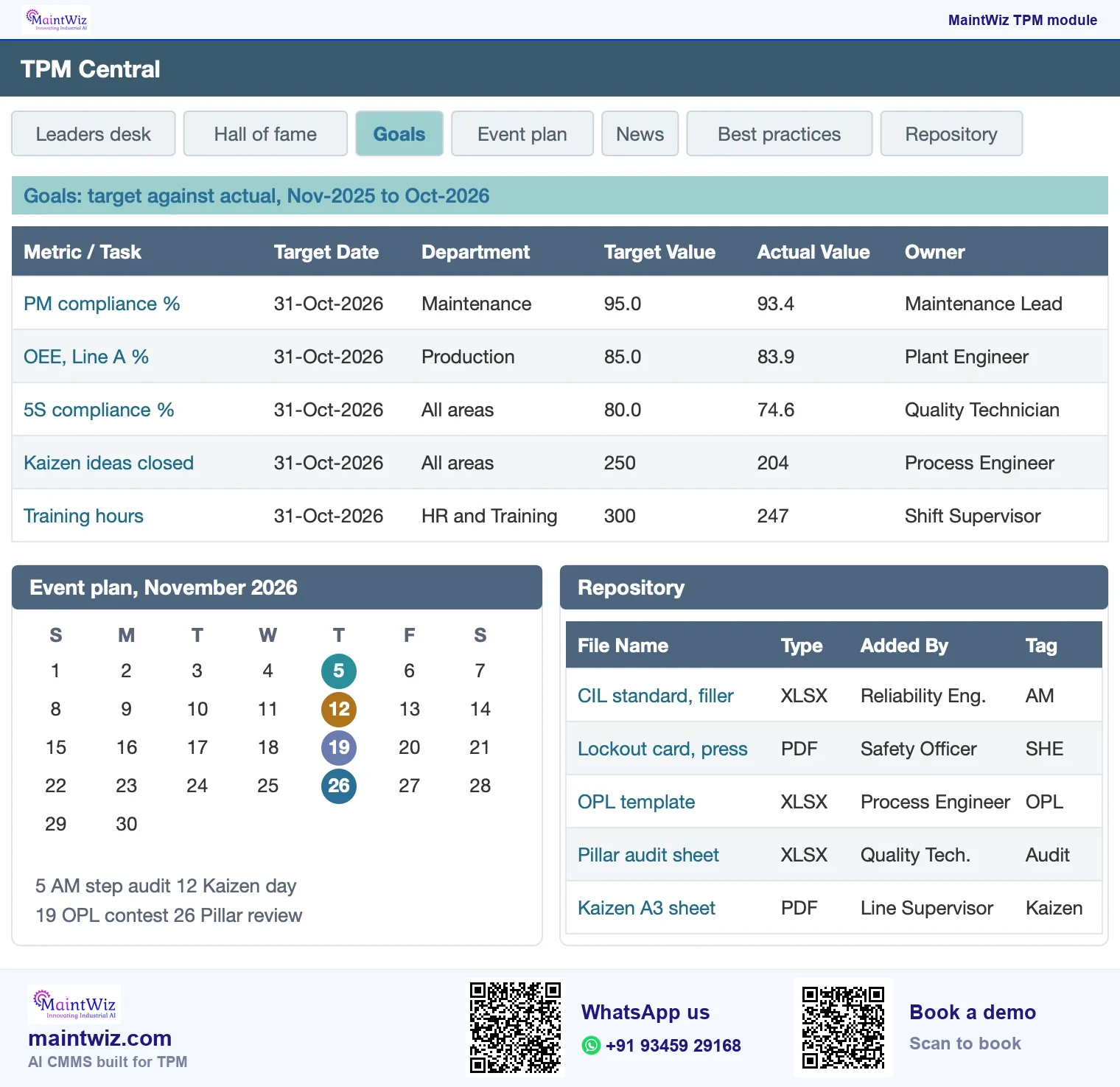
A digital TPM board shows on a screen near the line what a physical board would: loss charts, open tags, audit scores, projects and training records, fed by the plant's records. The advantage is that figures are current and roll up across lines. Keep the board to what the team uses in its daily meeting (Figure 7).
IoT data
What can IoT data and condition monitoring do?
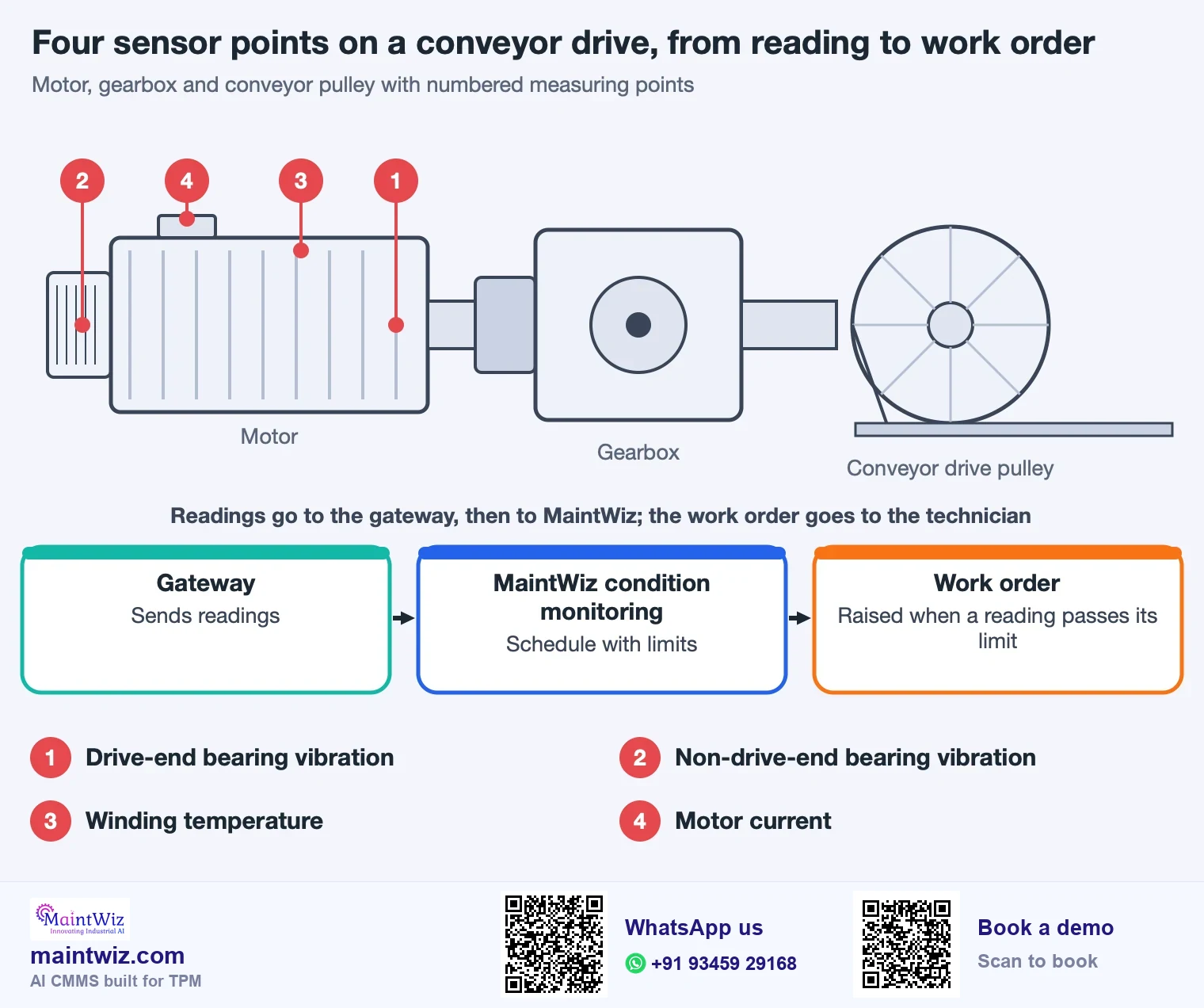
Sensors can give counts, running states, temperature, vibration and other conditions without waiting for a person to record them. That helps OEE capture and condition-based maintenance. In MaintWiz a reading past its limit raises a work order automatically, and operators add reason codes on mobile where a machine has no signal, so every stop has a cause and an owner.
Predictive maintenance and TPM
Predictive maintenance uses condition data to decide when to act. In TPM it supports the planned maintenance pillar for equipment where a condition measure signals failure early enough to act and the cost justifies it. It works alongside operator inspection: operators find the leaks, noises and loose parts that few plants instrument, and both land in the same MaintWiz work order list. Preventive maintenance by calendar, predictive maintenance by condition and operator care are used together.
What can AI do for TPM today?
MaintWiz is an AI CMMS built for TPM. MaintWiz AI agents run on your plant's own records (tags, work orders and losses) and generate a list of what needs to be watched. The agent proposes and your people approve, so every action keeps a named owner.
| What to check in any AI feature | How MaintWiz answers |
|---|---|
| What data does it use? | Your own tags, work orders and loss records |
| What does it output, and who acts on it? | A watch list; the named owner approves each action |
| How can we test it? | Shown on your own records in the demo |
| What happens when it is wrong? | Nothing changes until a person approves |
MaintWiz AI agents run on your records and generate a list of what needs to be watched; the agent proposes and your people approve. Book a demo to see the agents on your own tags and work orders.
Prerequisites
Skills, change and data prerequisites for digital TPM
- People: operators and technicians need time and training to use new tools; resistance to change is the common challenge.
- Data: asset registers, failure and loss codes and ideal rates have to be right first; standardisation and scarce failure data are the usual gaps.
- Process: agree who acts on each alert or tag, and by when.
- Ownership: someone owns the master data and the definitions.
- Security and access: decide who can see and change what; set roles with the system's administrator.
Security and access for digital TPM tools
Mobile and connected tools widen who can read and change plant records, so decide access before rollout and give each person a role with only the entitlements they need. MaintWiz sets menus, roles and entitlements per customer, supports enterprise single sign-on and exports data to XLS and PDF; SAP PM and MM connect through web services. Book a demo to walk through access for your plant.
What to set up first
- MaintWiz puts leadership review, training and 5S to work with pillar dashboards, training records and 5S audits.
- Agree loss and KPI definitions before connecting data (metric dictionary).
- Start where the routine already exists: an area with working CIL standards and a tag habit.
- Check the data first: an ideal cycle time that is wrong gives a wrong OEE however it is collected.
A readiness self-assessment shows where the basics are in place, and TPM software holds the records each digital layer reads.
Sequence
A practical sequence for digitising TPM
- Agree tag rules, CIL standards and loss definitions.
- Load the equipment list and masters into MaintWiz by Excel upload.
- Put tags and work orders on mobile in the pilot areas.
- Run PM schedules, OEE loss capture, 5S audits and training records on the same equipment list.
- Review the pillar dashboards, extend across areas and connect IoT, MES or SAP where needed.
The MaintWiz implementation team gives guided project management at each stage.
Digital TPM maturity: a staged view
Digital TPM maturity in four steps
Each step names the MaintWiz feature that marks it
- 1Paper and Excel
Equipment list loaded from Excel upload
- 2A digital register
Tags and work orders in one register
- 3Mobile capture and pillar dashboards
Phone capture and a dashboard for each pillar
- 4Connected signals and AI agents
IoT readings raise work orders; AI agents propose, people approve
maintwiz.comAI CMMS built for TPMWhatsApp us+91 93459 29168Book a demo| Stage | What is in place | Next step |
|---|---|---|
| Paper | Paper tags, check sheets and boards; spreadsheet register | Fix definitions; keep routines stable |
| Digitised records | Tags, checklists and work orders in a system | Use the data in weekly reviews |
| Connected | Machine counts and stop signals feed loss records | Validate against operator entries |
| Analytical | Trends, rankings and alerts guide action | Test rules on history before acting on them |
| Assisted | Models suggest causes or timing; people decide | Review accuracy; keep owners accountable |
MaintWiz covers every stage in one AI CMMS: tags first, OEE and IoT signals next.
Questions to ask
Questions to ask before any digital TPM purchase
| Question to ask | MaintWiz answer |
|---|---|
| Which of our routines does it cover? | All eight pillars, 5S, OEE, Kaizen and OPL on one equipment list |
| Can an operator raise a tag in a few taps? | Yes: a tag with colour and photo on a phone |
| How are reason codes and ideal rates maintained? | Configured with your team and loaded by Excel upload |
| What reports do we get? | Pillar dashboards; data exports to XLS and PDF |
| What does the pilot need from IT? | Public SaaS (on-premises on request), enterprise single sign-on, roles set per customer |
Build the ROI and business case on your own baseline
The strongest ROI and business case for digital TPM uses your own baseline of lost time, overdue tags and audit effort, and savings your plant has validated. The business case workbook sets it out with your own figures. Four steps build the case from your plant's records:
- Baseline the overdue tags: count the tags open past their target date, by area and owner, from the abnormality register.
- Baseline the lost hours: take the lost-hours Pareto from the OEE downtime report for the pilot line over a fixed period.
- Baseline the audit effort: note the hours spent preparing audit and review reports by hand.
- Validate the savings: after the pilot, read the same three figures on the same definitions and let finance confirm what was saved.
Book a demo and we will run it on your tag and downtime data.
Choosing a system? Score MaintWiz with the TPM software buyer's guide and see pricing. MaintWiz connects to SAP PM and MM through web services: TPM software with SAP integration.
FAQ
Frequently asked questions
How does Industry 4.0 change TPM?
It makes capture and monitoring easier through sensors, mobile apps and analytics. MaintWiz puts definitions, owners and failure records on one equipment list, so each signal lands on a record with an owner.
How does AI help operator inspections?
Operators raise tags on a phone at the machine and keep the checks they see, hear and smell. MaintWiz AI agents read those tags with work orders and losses, list what needs to be watched, and the owner approves each action.
Where should a plant start with digital TPM?
Start with mobile tags in one pilot area, then loss capture for OEE and PM work orders on the same equipment list. Add sensors line by line; in MaintWiz an IoT signal raises a work order automatically.
Does digital TPM improve OEE?
Digital tools make capture and monitoring easier, which gives OEE better data. The OEE gain comes from the routines that act on that data: reason codes, owners and a weekly review.
What is condition monitoring in TPM?
Condition monitoring measures the state of equipment (for example vibration or temperature) to decide when to act. In TPM it supports planned maintenance, alongside the operator checks of autonomous maintenance.
What questions should I ask a vendor about AI features?
Ask what data it uses, what it proposes and who approves it, then see it work on your own records. MaintWiz AI agents use your tags, work orders and losses, and nothing changes until a person approves.
Do I need to digitise all eight pillars?
No. Start where follow-up is hardest on paper, usually tags and abnormalities, planned maintenance and OEE. Office TPM runs in its own MaintWiz view, with office tags and a dashboard, when you are ready.
What is TPM 4.0?
TPM 4.0 is shorthand for running Total Productive Maintenance with Industry 4.0 tools: sensors, connected records and analytics. The eight pillars, the routines and the role of operators stay as they were. Only the tools that capture and move information change.
What is a digital TPM board?
It is the activity board moved onto a screen beside the line. The team sees loss charts, open tags, audit scores, projects and training records, updated from the plant's records, so the daily meeting starts from current figures.
How does predictive maintenance fit into TPM?
Predictive maintenance uses condition data to time maintenance work and belongs to the planned maintenance pillar. It complements operator inspection and calendar-based preventive tasks rather than replacing them.
What are the challenges of digital TPM?
The usual challenges are data aggregation, standardisation, scarce failure data, skills shortages and resistance to change. Practical prerequisites are reliable asset records, agreed definitions, owners for each alert and time for training.
Sources
Sources
- JIPM, About TPM https://www.jipmglobal.com/about/tpm/
- JIPM, About TPM (pillars) https://jipmglobal.com/tpm/about_us_en