
Key takeaways
- A one point lesson (OPL) is a one-page, single-topic training sheet read in about five minutes.
- Common types are basic knowledge, problem case and improvement case.
- Write one point, show it with a picture, state the risk and verify understanding.
- MaintWiz holds each OPL with steps and images, initiator, verifier and approver, and exports it to PDF.
What an OPL is
What is a one point lesson?
Training that takes hours is hard to schedule and easy to forget. An OPL puts one fact or skill on one page, with a picture, so it can be taught at the machine in a few minutes and re-read when needed. They are used for basic knowledge (how a part works), problem cases (what went wrong and how to prevent it) and improvement cases (what was changed and why). JIPM, the Japan Institute of Plant Maintenance, lists education and training among the necessary pillars of TPM; one point lessons are how that pillar puts a skill on one page at the machine.
Operators learn the point at the machine, in minutes, with the picture carrying the lesson (Figure 1).
Layout of a one point lesson
One topic on one page, readable at arm's length
Check the chain tension
OPL no. 0042 | Packing line, conveyor drive
- Stop the line
- Press mid-span
- Check the play
Classification: [x] Basic knowledge [ ] Trouble case [ ] Improvement case
Why it matters: A slack chain wears the sprocket and jams
Trained
| Date | Name | Trainer |
|---|---|---|
| 03 Nov 2026 | Operator A | Shift leader |
Author | Date | Approver | Review date
- 1
OPL number
identifies the lesson in the library
- 2
Title
one topic
- 3
Picture
with the point marked
- 4
Steps
numbered, each short
- 5
The reason
what goes wrong otherwise
- 6
Classification
basic knowledge, trouble case or improvement case
- 7
Sign-off
author, date, approver, review date
- 8
Trained record
date, name and trainer for each person
 maintwiz.comAI CMMS built for TPM
 WhatsApp us
 +91 93459 29168
 Book a demo
What is the format of a one point lesson?
| Field | What goes in it |
|---|---|
| Title / theme | The one point, short enough to read at arm's length |
| Classification | Basic knowledge, problem case or improvement case |
| Equipment and area | Where it applies |
| Pillar | Which TPM pillar it supports, for example autonomous maintenance |
| Lesson | The point in a sentence or two |
| Steps | Three to five short steps, each with a picture |
| Why it matters | The risk or loss the point prevents |
| Do not do | What should stop the work and be escalated |
| Safety | PPE and controls per site standard |
| Verification | How you check it was understood: ask-back, demonstration, quiz |
| People | Who wrote it, who verified, who approved; who was trained and when |
What are examples of one point lessons?
- Basic knowledge: how to check chain tension on a conveyor, with a photo of the correct slack and a go/no-go gauge.
- Problem case: why a guard bolt that backed out stopped a line, with the failed part, the cause and the fix.
- Improvement case: how a quarter-turn fastener replaced four screws on a guard, with before and after pictures.
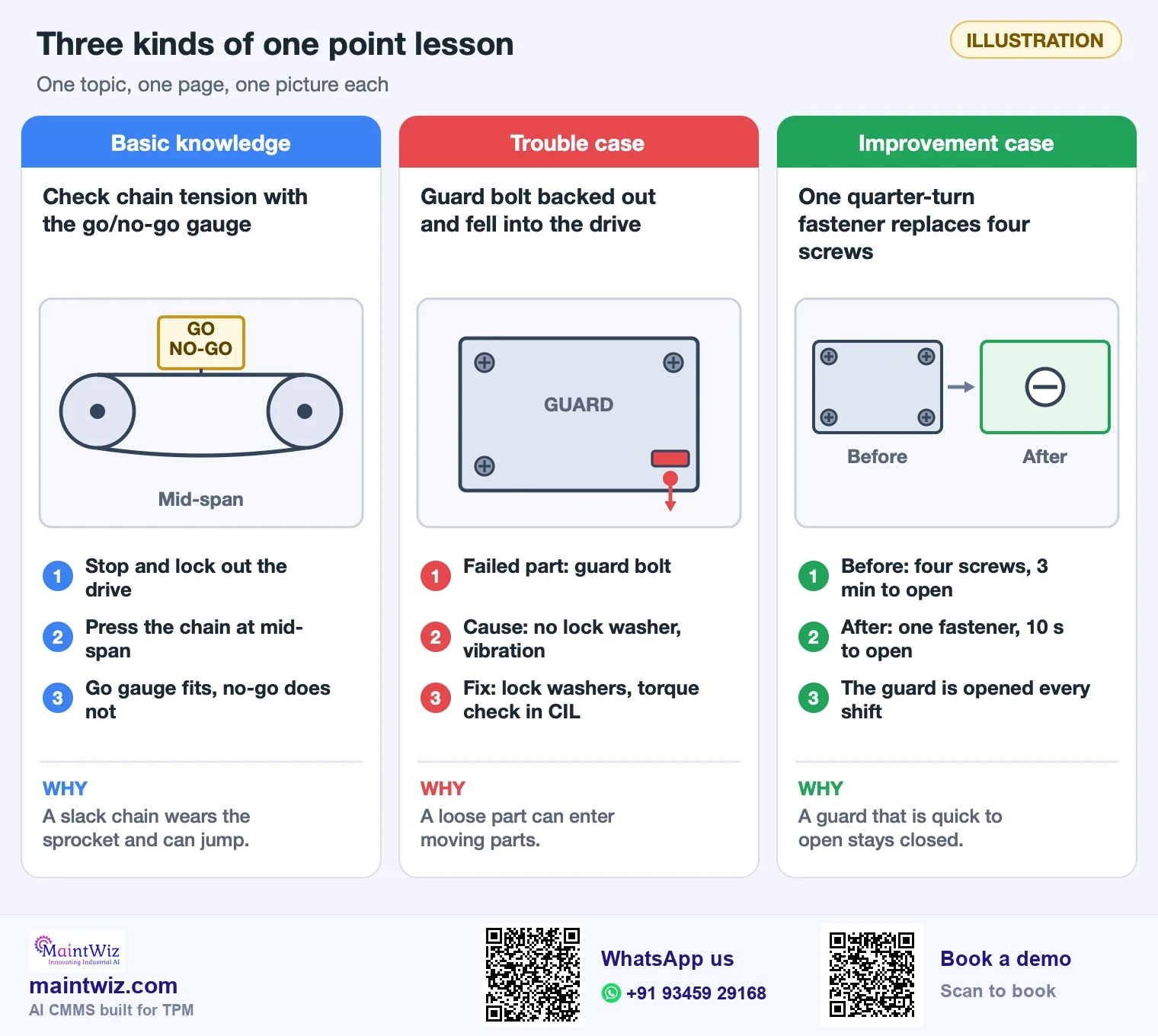
A filled-in one point lesson you can copy
| Field | Filled-in OPL |
|---|---|
| Title / theme | Check conveyor chain tension with the go/no-go gauge |
| Classification | Basic knowledge |
| Equipment and area | Packing line, conveyor drive |
| Pillar | Autonomous maintenance |
| Lesson | The chain is correctly tensioned when its slack sits inside the marked band of the gauge |
| Steps | 1 Stop and lock out the conveyor. 2 Lift the chain guard. 3 Press the chain midway between the sprockets and read the slack on the gauge. 4 Slack inside the band: refit the guard and record the check. 5 Slack outside the band: tag it and call maintenance |
| Why it matters | A loose chain jumps teeth and wears the sprocket; a tight chain overloads the bearings |
| Do not do | Do not move the motor mount yourself; tag it and call maintenance |
| Safety | Lock out before lifting the guard; gloves on |
| Verification | The operator repeats the check on the conveyor in front of the verifier |
| People | Written by the line operator, verified by the shift leader, approved by the maintenance supervisor |
Free files
One point lesson template: Excel log and A4 print form
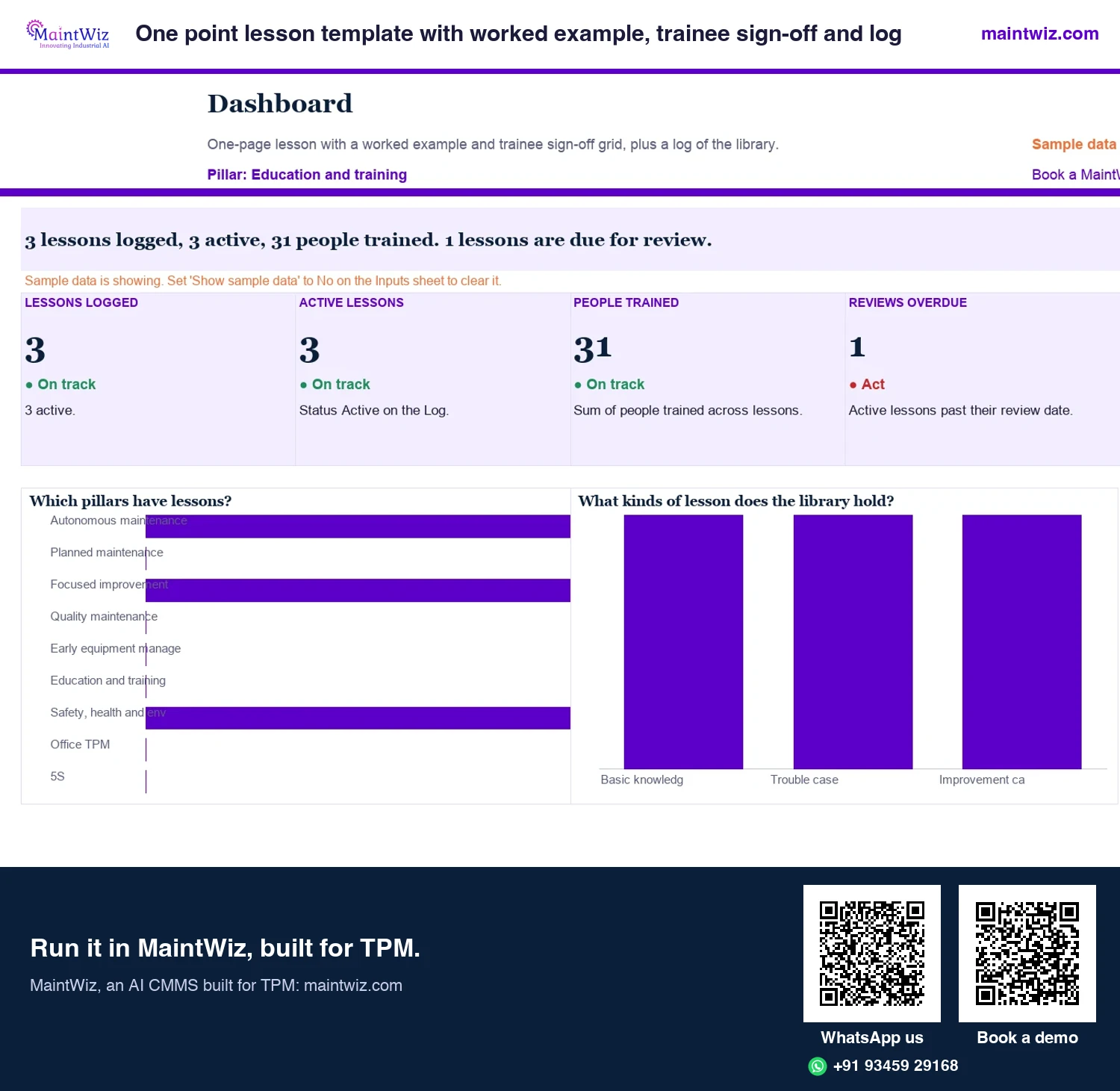
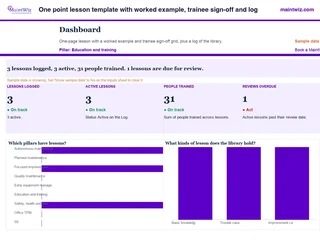 ExcelOne point lesson template with worked example, trainee sign-off and log
Fill a one-page lesson with a worked chain tension example
- Sheets
- Dashboard, OPL, OPL blank, Inputs, Log, Read me
- A4
- Version
- v1.0, 2 November 2026
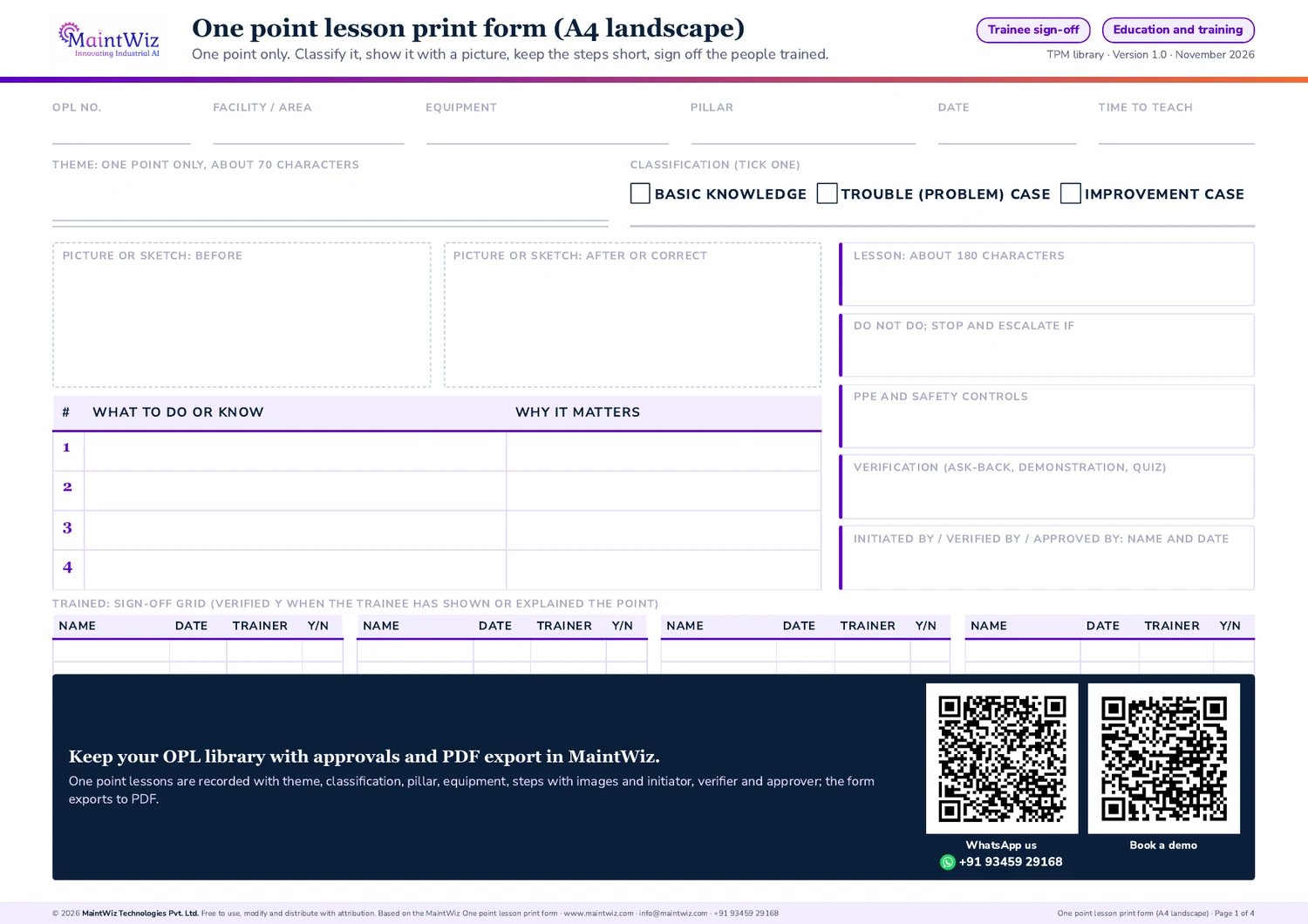
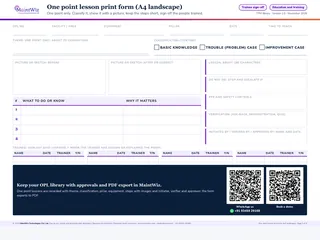 PDFOne point lesson print form
Print-ready A4 one point lesson with before and after pictures, a trainee sign-off grid and three filled examples
- Pages
- 4
- A4 landscape
- Created
- 5 November 2026
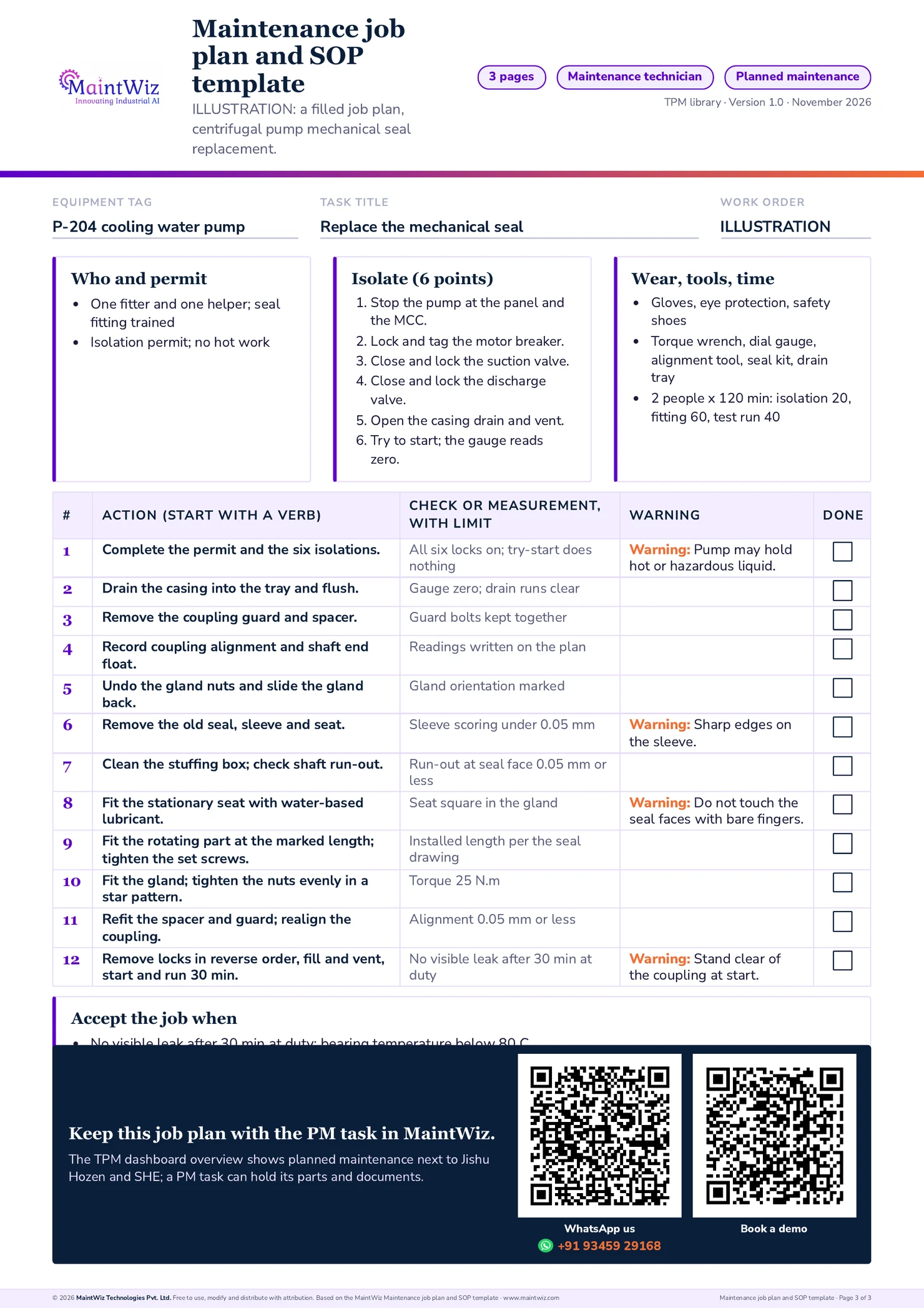
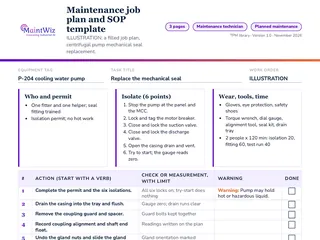 PDFMaintenance job plan and SOP template (PDF)
Print a job plan with isolation, PPE, steps, limits and acceptance
- Pages
- 3
- A4
- Created
- 5 November 2026
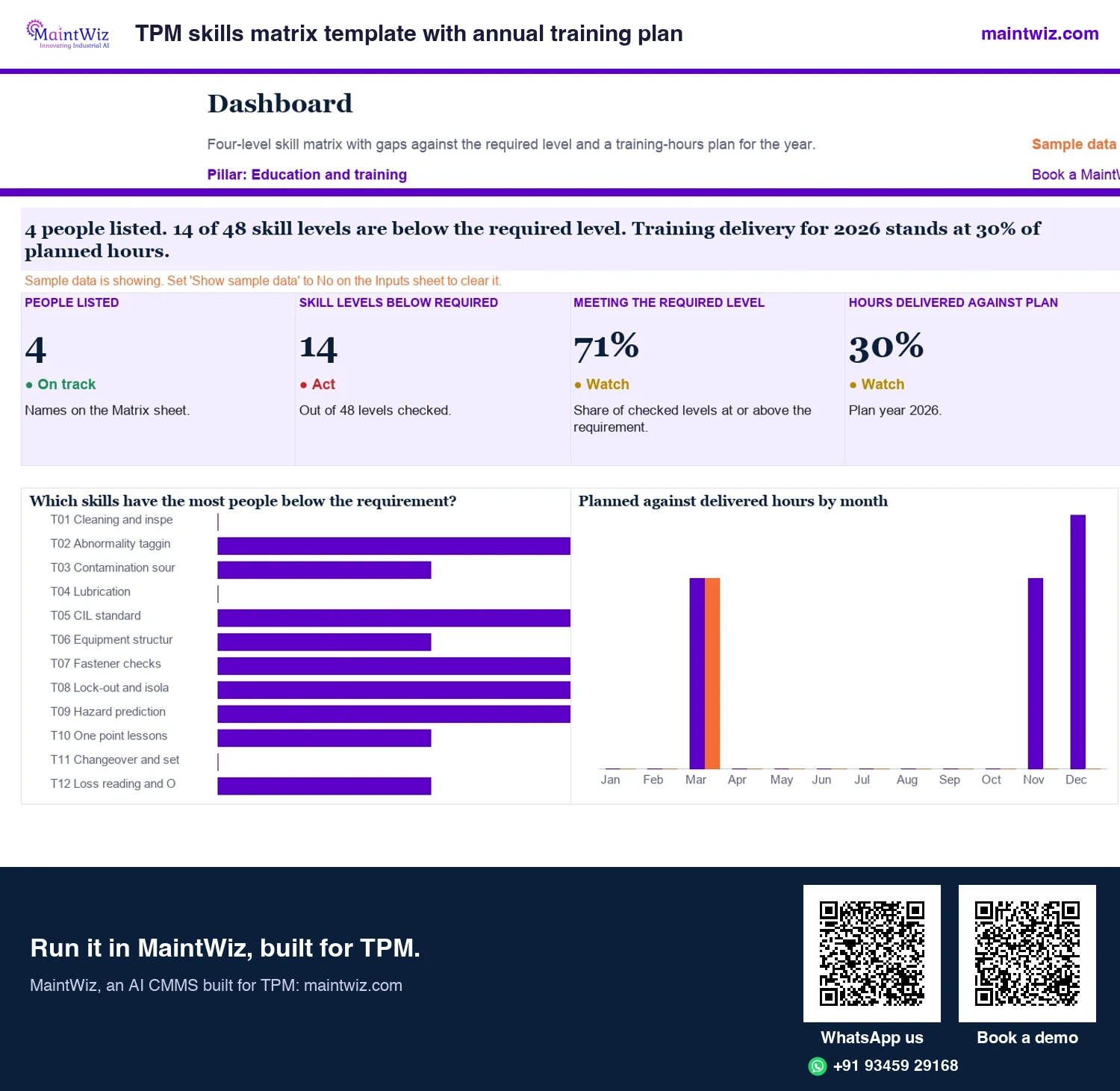
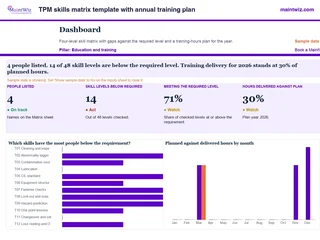 ExcelTPM skills matrix template with annual training plan
Four-level skill matrix with quarter-circle symbols
- Sheets
- Dashboard, Inputs, Matrix, Plan, Read me
- A4
- Version
- v1.0, 2 November 2026
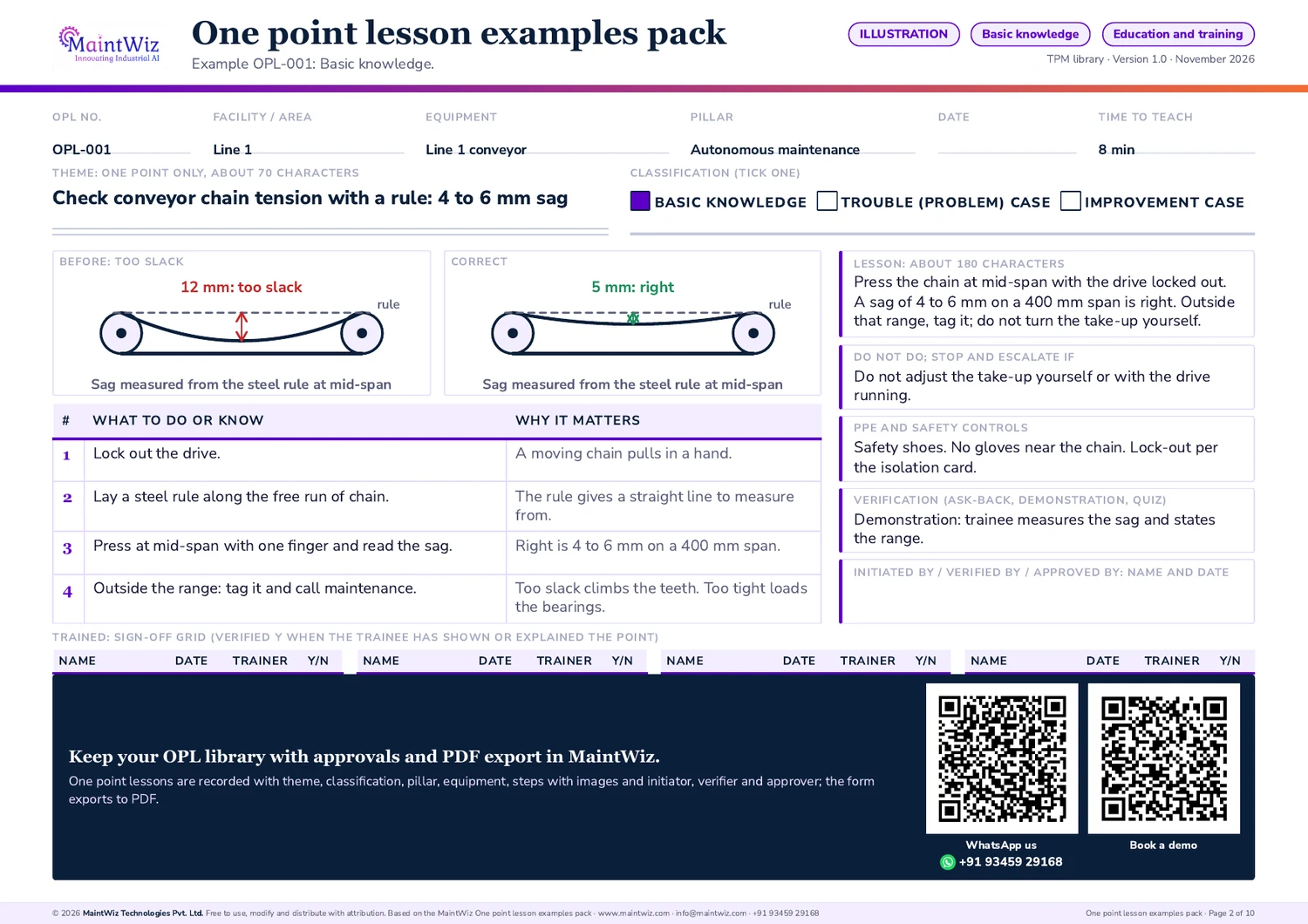
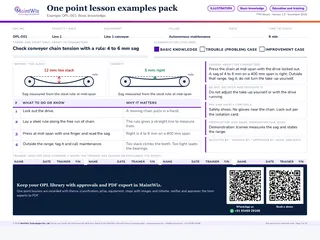 PDFOne point lesson examples pack: 9 filled OPL examples (PDF)
Learn the one point lesson format from nine filled examples, from lubrication and a bearing failure to a guard latch and a changeover poka-yoke.
Inside: Three basic knowledge lessons, three trouble cases and three improvement cases · One point, before and after pictures and four short steps with reasons · Time to teach and pillar for each lesson · Trained grid for sign-off
- Pages
- 10
- A4 landscape
- Created
- 5 November 2026
Writing one
How do you write a one point lesson in five minutes?
- Choose one point. If you need 'and', write two OPLs.
- Take a photo of the equipment and mark the point with an arrow.
- Write three to five steps in plain words, starting each with a verb.
- State the risk if it is not done and what to do if it looks wrong.
- Have a second person read it and show you they can do it.
- Approve it, issue it and record who was trained.
OPL template
The free OPL print form puts these fields on one A4 landscape page with verification and three sign-offs, and the Excel template adds a library log.
OPL vs SOP
How does an OPL differ from an SOP and a checklist?
| One point lesson | Standard operating procedure | Checklist | |
|---|---|---|---|
| Purpose | Teach one point | Define how a whole task is done | Confirm steps were done |
| Length | One page | Several pages | One page or a card |
| Used | At training and when needed | As the controlled reference | During the task |
| Updated | Quickly, by the team | Through document control | With the SOP |
If an OPL changes how a task must be done, update the controlled document too.
How do you check the quality of an OPL?
- One point only.
- A picture or sketch that shows the point.
- Steps start with a verb and are short.
- The risk if it is not done is stated.
- A do-not-do or stop-and-escalate line is present where relevant.
- It has been checked by someone who tried to follow it.
- It names who approved it and when.
Running a five-minute OPL session
- Gather the team at the equipment.
- Read the lesson aloud and show the point on the equipment.
- Ask someone to demonstrate it.
- Ask what would happen if it were skipped.
- Record names and the date, and note any question that changes the OPL.
Types
Types of one point lesson
| Type | Purpose | Example topics |
|---|---|---|
| Basic knowledge | Teach a fact or principle | How a gearbox seal works; what normal temperature is |
| Problem case | Share a failure or defect and its cause | A past breakdown and what to look for |
| Improvement case | Share a change that worked | A guard redesign that makes cleaning faster |
Pick the type before you write: a basic knowledge lesson teaches a principle, a problem case warns, and an improvement case spreads a change.
A layout checklist
- One topic and a clear title.
- A picture or diagram of the equipment, with the point marked.
- Numbered steps, each short enough to read at the equipment.
- The reason: what goes wrong if it is not done.
- Author, date and approver; a review date.
- Readable at arm's length: large type, little text.
Running an OPL library
- Appoint a librarian and a review cycle.
- Number lessons and tag them by pillar and equipment.
- Display the lesson at the equipment where it applies.
- Retire lessons when equipment or standards change.
- Count lessons used in sessions, not only lessons written.
In a CMMS
How do you manage OPLs in a CMMS?
In MaintWiz, an AI CMMS built for TPM, every OPL is a controlled record: open, completed and cancelled lists, a classification and pillar on each lesson, steps with pictures, initiator, verifier and approver sign-off, and a PDF for display at the machine. OPLs can be written in Hindi, Tamil or any other script because MaintWiz supports Unicode; menus are in English.
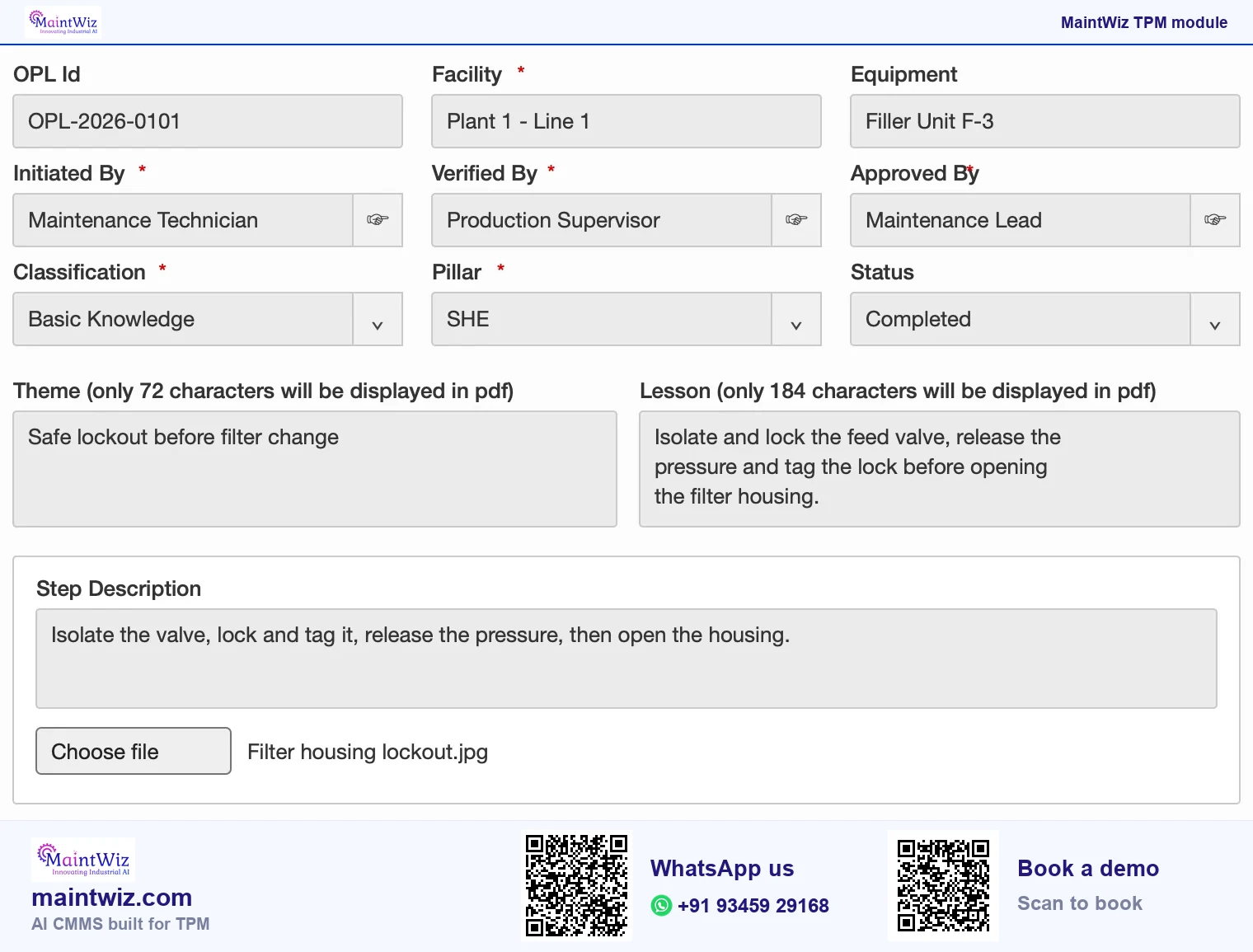
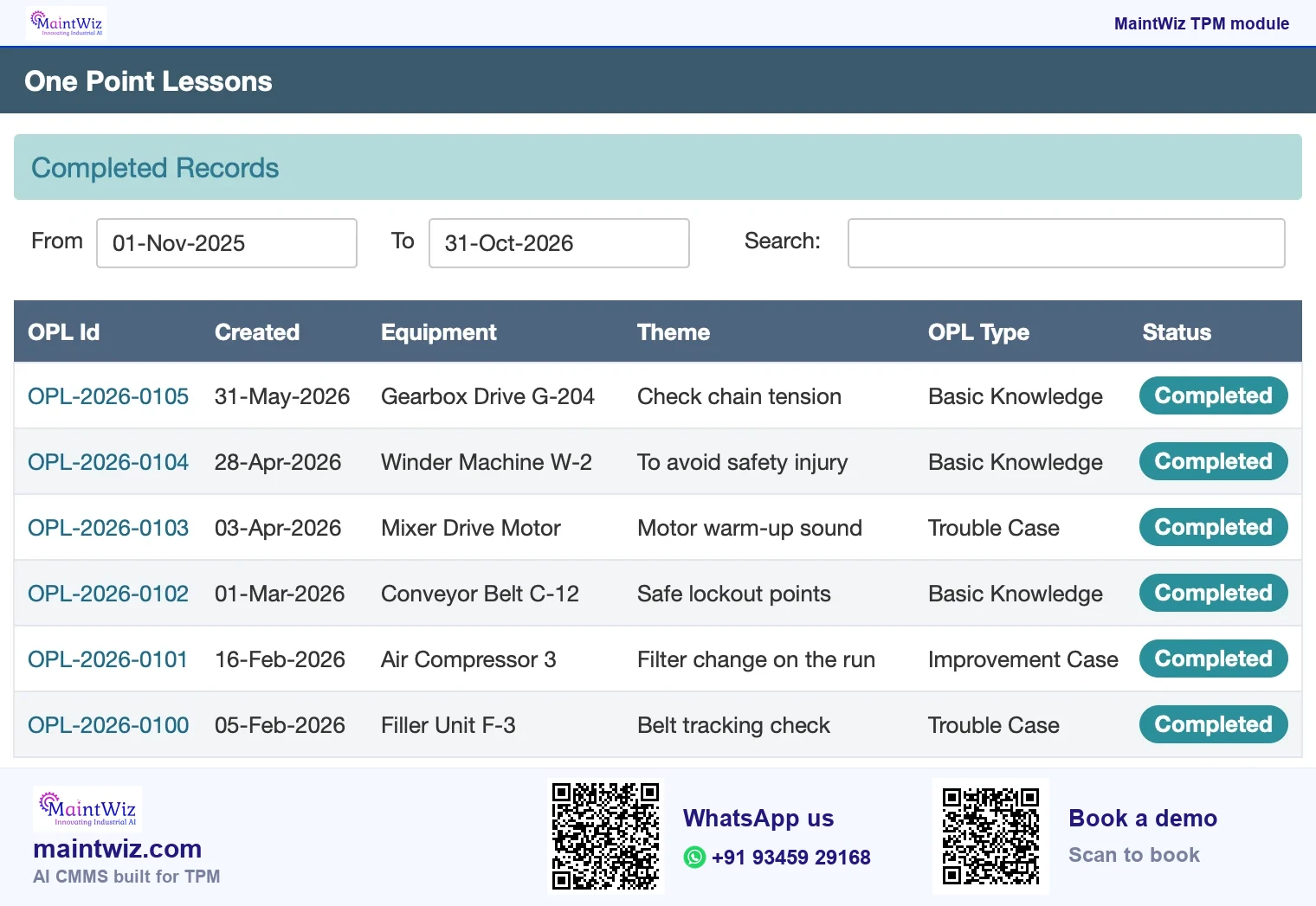
See an OPL with steps, images and approver sign-off on your own equipment. Book a demo.
FAQ
Frequently asked questions
What is a one point lesson?
A one point lesson is a one-page training sheet on a single topic, used in TPM to teach operators and technicians at the equipment in a few minutes. It carries one point, a picture, a few steps and a way to verify understanding.
How long should an OPL take to read?
About five minutes. If it takes longer or needs the word 'and' to describe its point, split it into more than one lesson so each stays quick to teach and easy to remember.
How do OPLs support autonomous maintenance?
They teach the inspection and basic-care skills operators need between steps 3 and 5 of Jishu Hozen in short sessions at the machine, and they pass on lessons from tags and improvements.
What should a one point lesson contain?
A title stating the one point, classification, equipment and pillar, the lesson in a sentence or two, three to five steps with pictures, why it matters, any stop-and-escalate instruction, safety controls and how it was verified.
Who should write and approve an OPL?
Anyone who knows the point can write it, typically the operator or technician who found it. A second person should try to follow it, and a supervisor or engineer approves it. Record who wrote, verified and approved it.
Where should one point lessons be stored?
Where people can find them by equipment and topic and see who approved them. In MaintWiz each OPL is a record with its equipment, theme, classification, pillar and status, signed off by initiator, verifier and approver and exported as a PDF for the machine.
What are the three types of one point lesson?
Basic knowledge lessons teach a fact or principle, problem case lessons share a failure and its cause, and improvement case lessons share a change that worked.
How do you review an OPL library?
Appoint a librarian, review on a fixed cycle, retire lessons when equipment or standards change, and check which lessons are actually used in sessions and at the equipment.
Which TPM pillar do one point lessons belong to?
One point lessons are a tool of the education and training pillar, Kyoiku Kunren, and every other pillar uses them: autonomous maintenance for inspection skills, quality maintenance for condition standards and safety for hazard lessons. Each OPL names the pillar it supports.
Can one point lessons be written in the operator's language?
Yes. In MaintWiz an OPL can be written in Hindi, Tamil or any other script, because MaintWiz supports Unicode, so the lesson at the machine reads in the operator's own language. The menus and labels of the interface are in English.