
Key takeaways
- Early equipment management (EEM) applies maintenance experience to the design, purchase and commissioning of new equipment.
- Lessons are recorded on MP (maintenance prevention) sheets so designers can reuse them.
- Handover to operations is a decision against stable-operation criteria, not a date.
- In MaintWiz the EEM module is the MP sheet: entry, reports, a dashboard and PDF export, so a design review pulls the MP sheets recorded on the same facility and equipment.
Meaning
What does early equipment management mean?
Most equipment problems are built in at design: parts that are hard to reach for cleaning or lubrication, contamination sources nobody designed out, specifications that ignored what operators and maintenance already knew. EEM captures that knowledge from existing equipment and applies it before the new equipment is built, which is sometimes called maintenance prevention (MP) design.
Why does maintenance prevention in design matter?
Every weakness designed out is a cleaning, lubrication or repair task you never have to schedule. EEM also shortens the initial period after start-up in which new equipment is unstable.
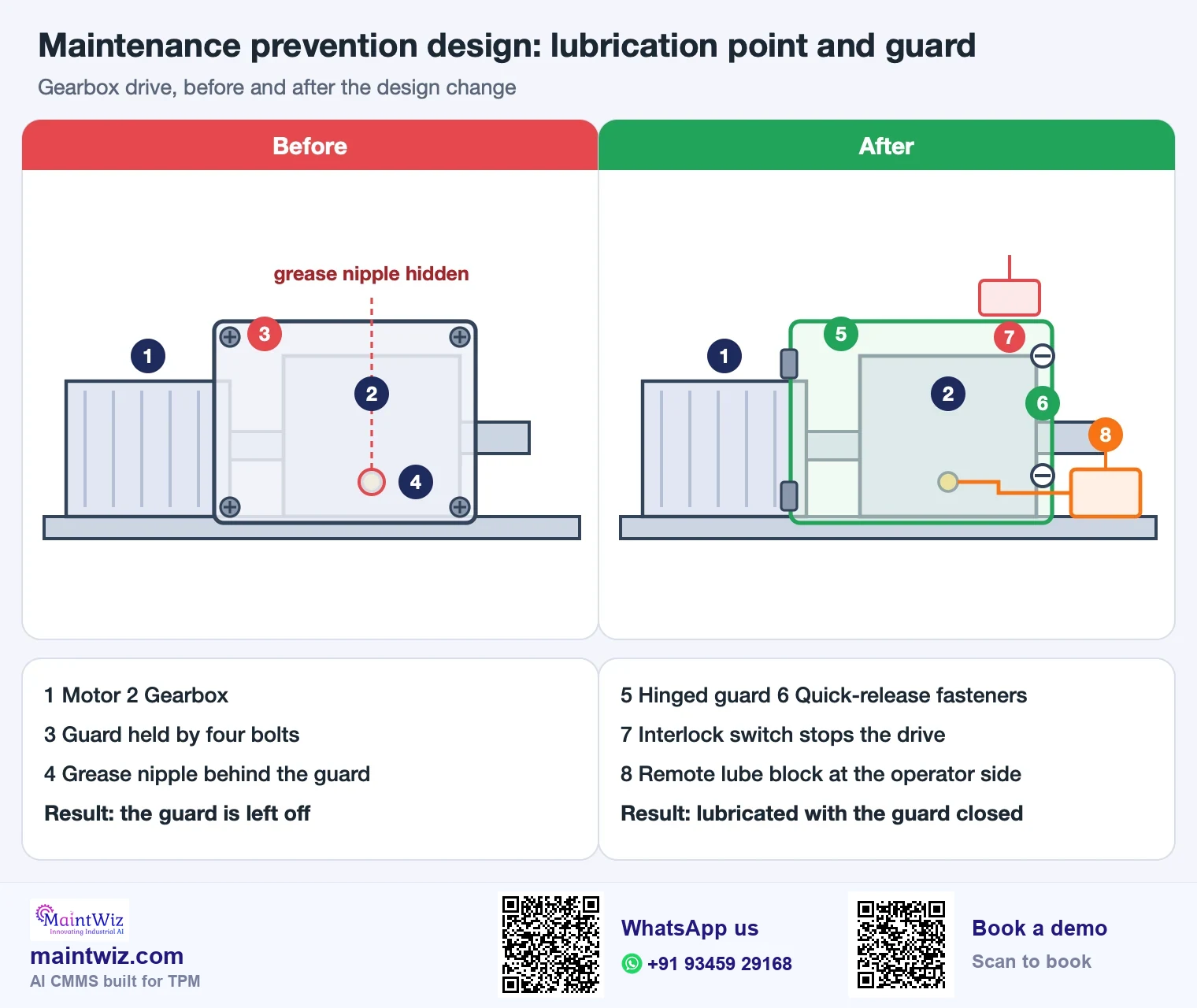
Bringing operators and maintenance into the design review is where early equipment management starts: a grease point hidden behind a guard is moved to where the operator can reach it, and the guard is made quick to open (Figure 1).
Free files
Early equipment management templates: MP sheet log and design review
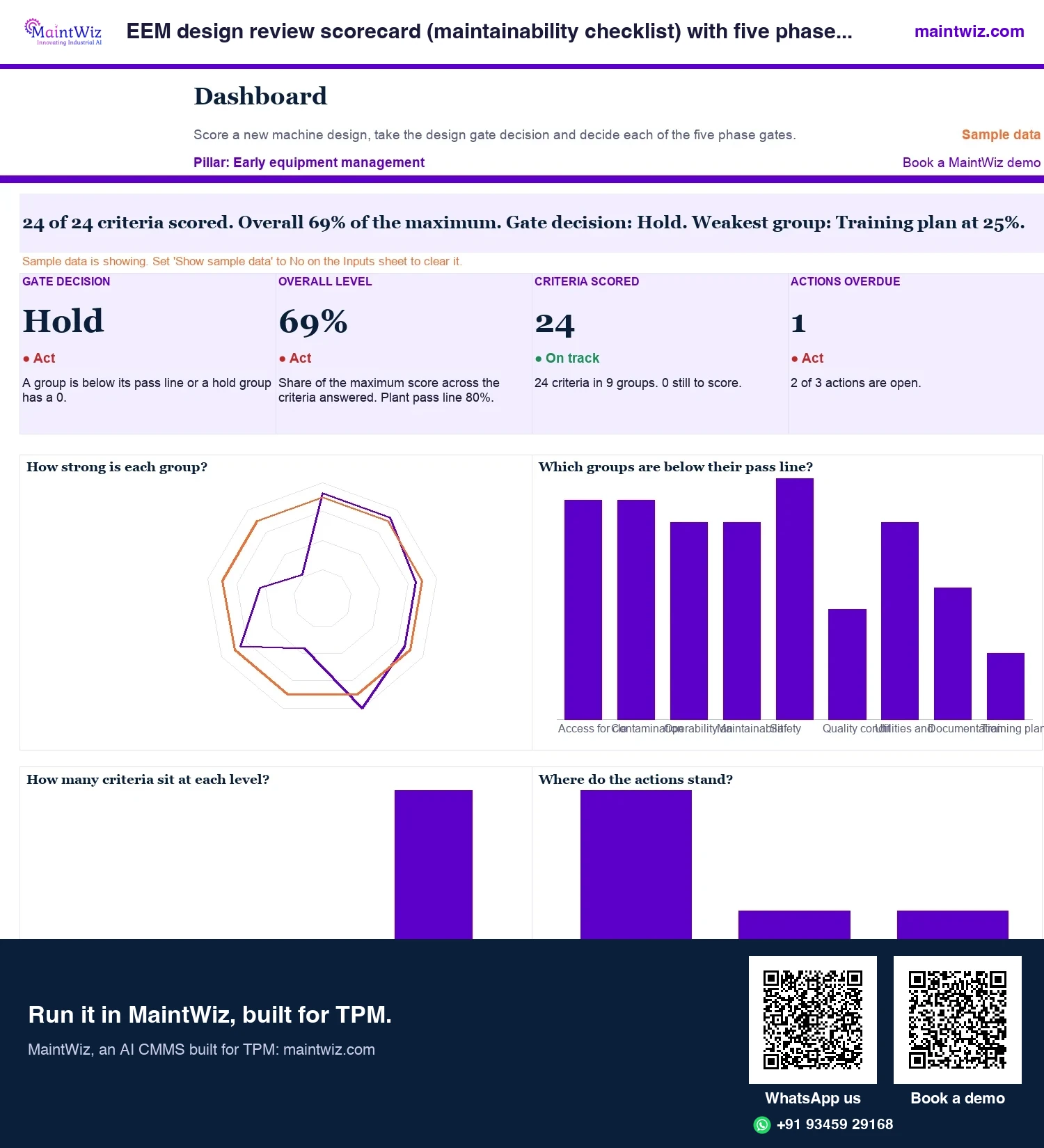
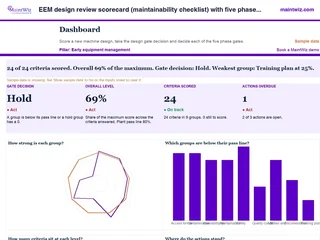 ExcelEEM design review scorecard (maintainability checklist) with five phase gates
Score a new machine design on 24 criteria, back findings with MP sheets, and take a Go or Hold decision for each phase
- Sheets
- Dashboard, Inputs, Review, Gate, Actions, Phase checklist, Phase gates, Read me
- A4
- Version
- v1.1, 4 November 2026
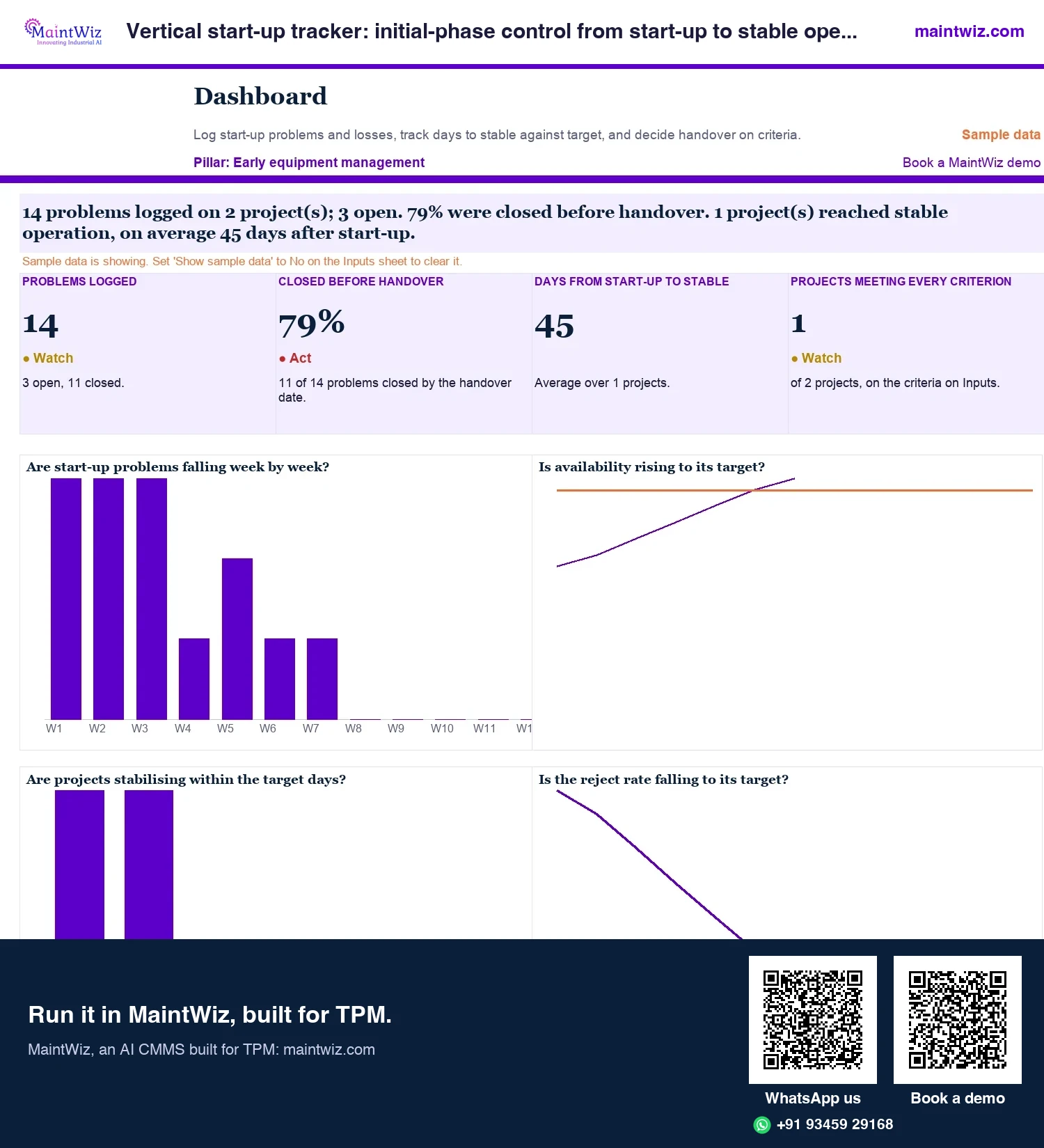
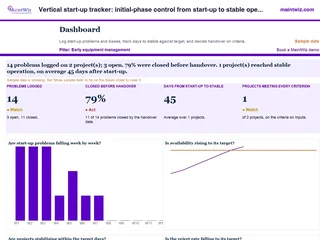 ExcelVertical start-up tracker: initial-phase control from start-up to stable operation
Track start-up problems and losses week by week, compare days to stable with your target
- Sheets
- Dashboard, Inputs, Projects, Problems, Start-up log, Stable check, Read me
- A4
- Version
- v1.1, 4 November 2026
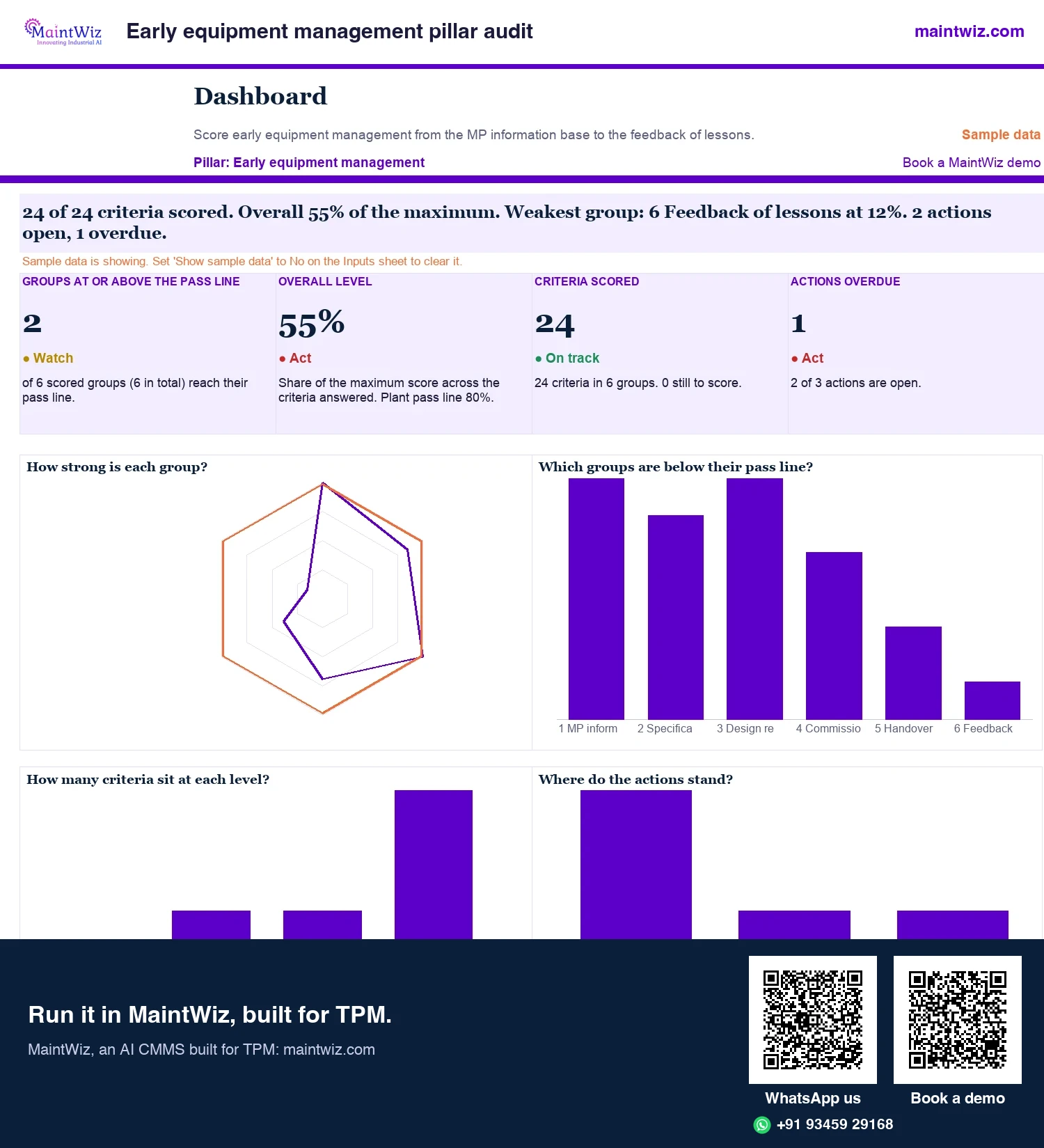
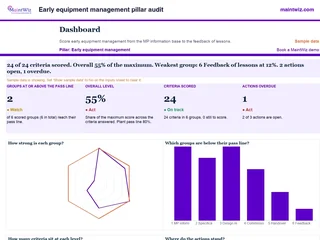 ExcelEarly equipment management pillar audit
Audit the Early Equipment Management pillar with scored criteria, a radar against your pass line and an action list
- Sheets
- Dashboard, Inputs, Audit, Actions, Read me
- A4
- Version
- v1.0, 2 November 2026
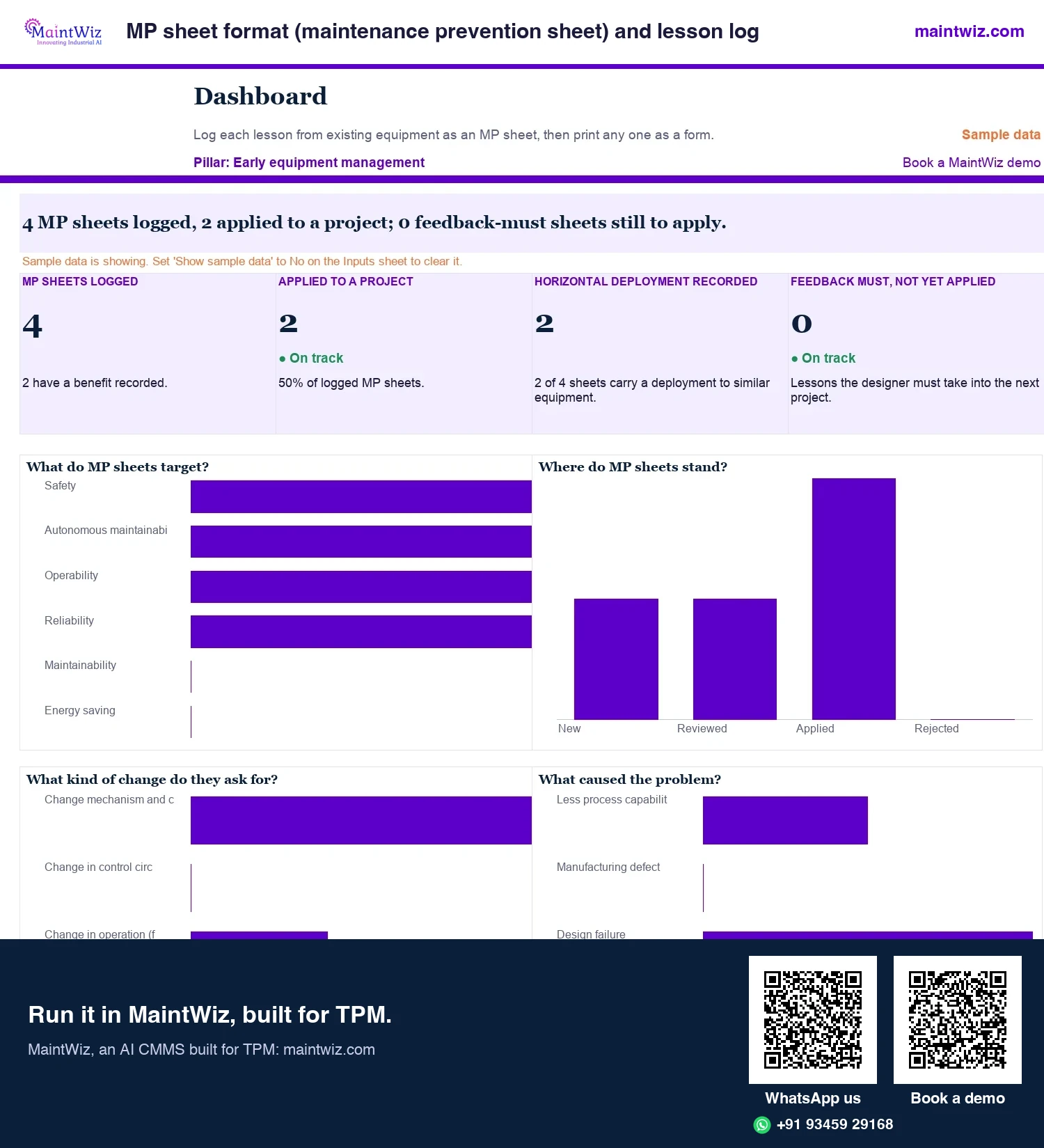
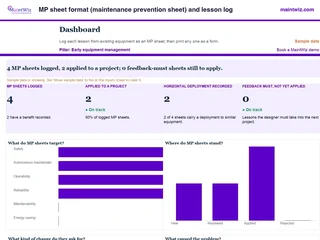 ExcelMP sheet format (maintenance prevention sheet) and lesson log
Log lessons from running equipment as MP sheets, print any as a form with before and after sketches, and feed early equipment management designers.
Inside: MP sheet log: source equipment, problem seen, necessity, classification, cause and target · Printable MP sheet form with before and after sketch areas · Horizontal deployment and applied-to-project tracking · Feedback-must sheets still to apply
- Sheets
- Dashboard, Inputs, MP sheets, MP sheet, Read me
- A4
- Version
- v1.1, 4 November 2026
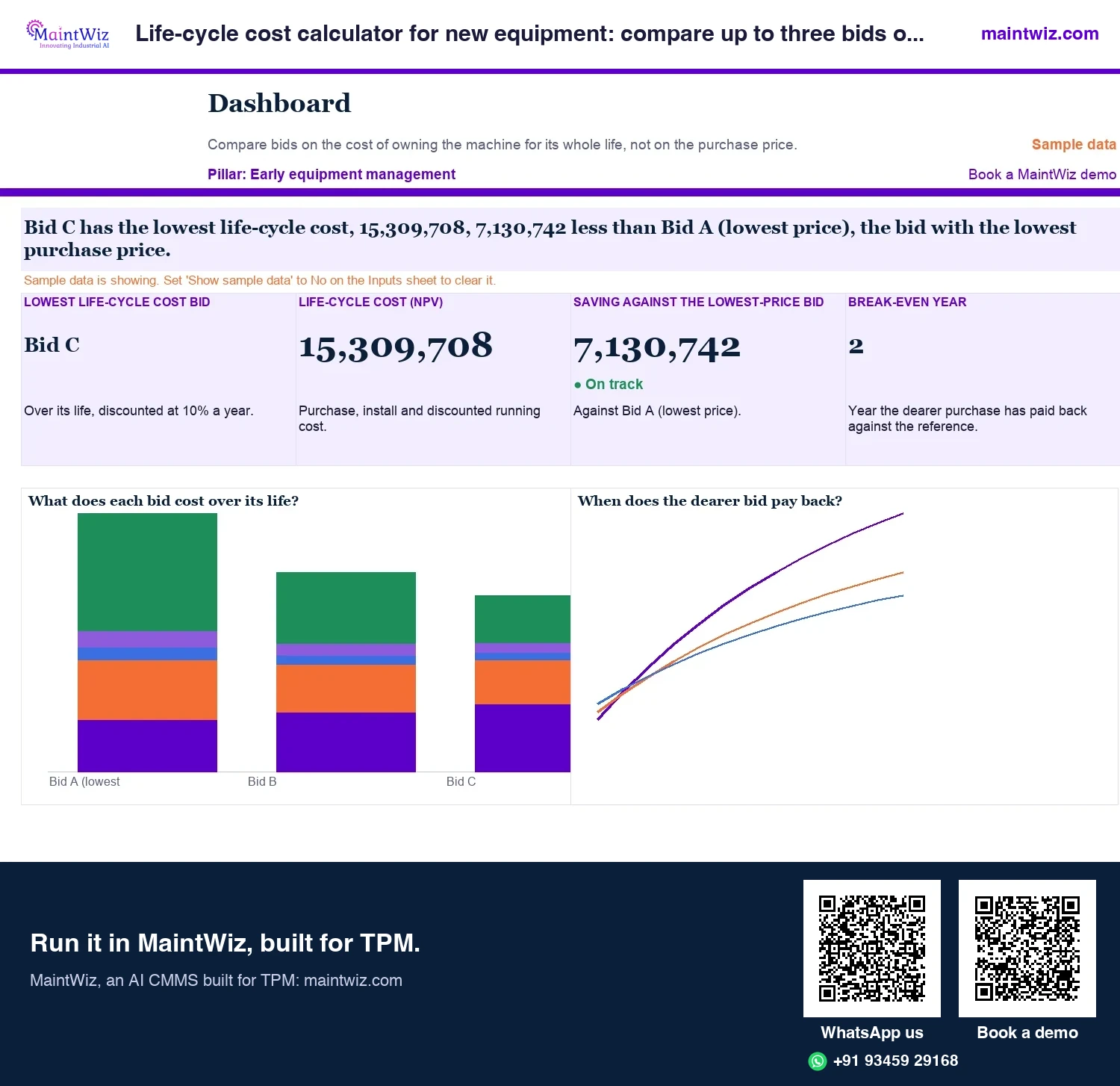
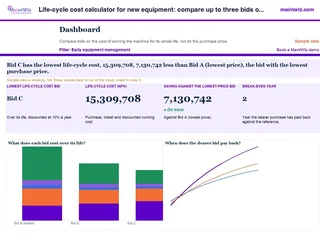 ExcelLife-cycle cost calculator for new equipment: compare up to three bids on total cost
Compare up to three bids for new equipment on life-cycle cost: energy, spares, maintenance and lost production, and see when the dearer bid pays back.
Inside: Bids sheet: price, installation, energy use, spares, planned maintenance hours, availability and life · Cost to date year by year in present value · Lowest life-cycle cost bid and saving against the lowest-price bid · Break-even year
- Sheets
- Dashboard, Inputs, Bids, Years, Read me
- A4
- Version
- v1.0, 4 November 2026
Phases
What are the phases of early equipment management?
| Phase | Handover check |
|---|---|
| Specify | Maintenance and operating needs written into the specification; lessons from similar equipment reviewed |
| Design review | Access for cleaning, inspection and lubrication checked; contamination sources designed out; operators and maintenance took part |
| Build and install | Acceptance includes maintainability checks; drawings, manuals and lubrication charts received |
| Commission | Initial-phase problems logged and closed; start-up losses measured; CIL standards drafted before handover |
| Stable operation and handover | Stable-operation criteria met; people trained; standards, spares and lessons in place |
Early equipment management (Shoki Kanri): phases
Five phases from specification to stable operation
Specify and design
Build and test
Install and commission
Initial flow control (initial-phase control)
Stable operation
Lessons recorded as MP sheets
feed the next specification and design review
 maintwiz.comAI CMMS built for TPM
 WhatsApp us
 +91 93459 29168
 Book a demo
What is an MP sheet?
An MP sheet records a lesson in a form designers can reuse: the improvement theme, the problem seen, the cause, how necessary a feedback is, how the change is classified (mechanism, control circuit, operation or raw material), the cause category (process capability, manufacturing defect, design or specification failure), the target (safety, operability, reliability, maintainability, energy saving or autonomous maintainability) and which standard documents to update.
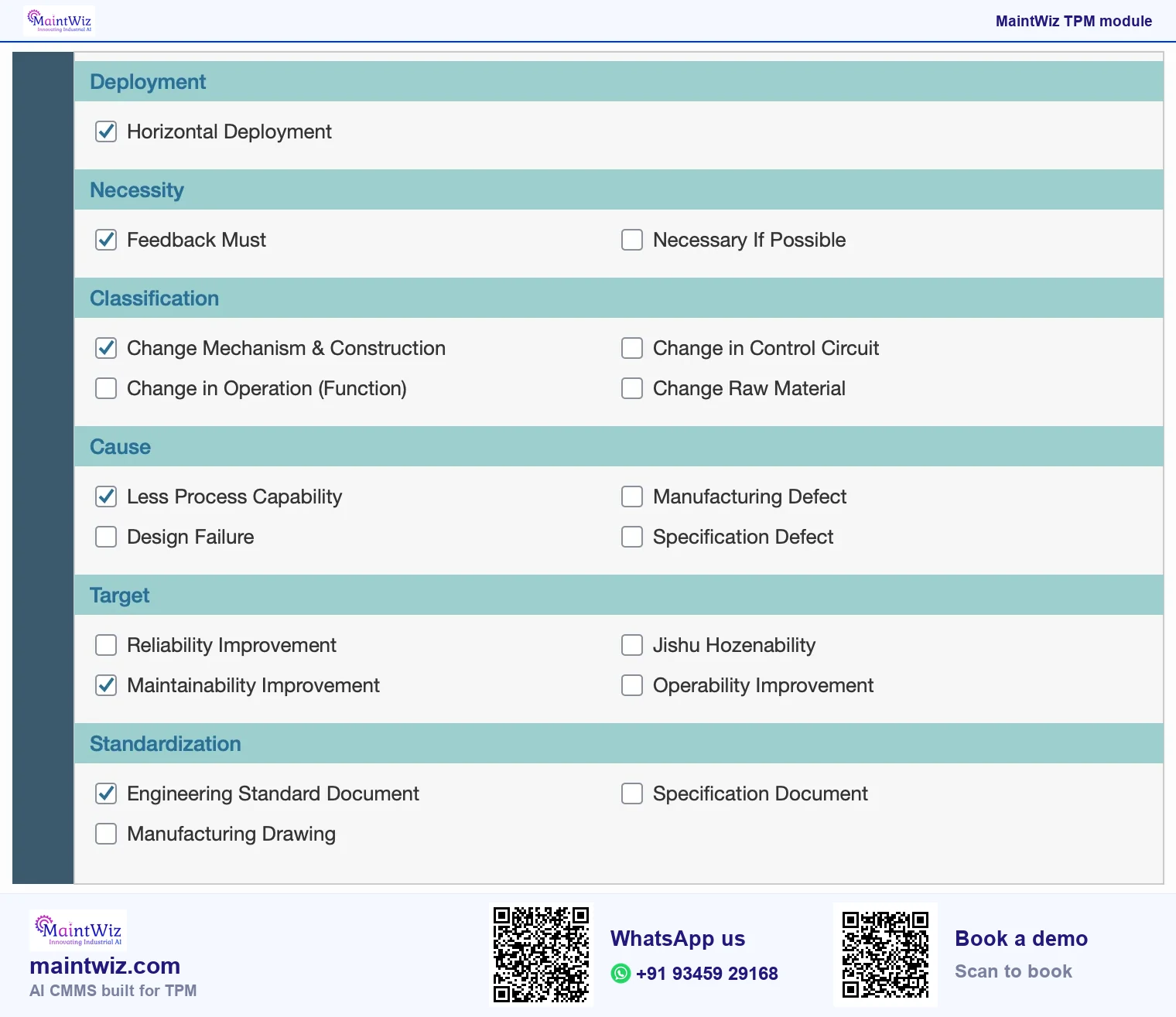
The free MP sheet format and lesson log uses the same fields, so lessons logged in Excel today load into MaintWiz during the roll-out through easy Excel uploads.
An MP sheet records a design lesson for the next machine; a Kaizen idea sheet records an improvement on the running one, and a Kaizen A3 report works one problem through to its countermeasure.
What design lessons does EEM capture?
| Lesson from existing equipment | Design change for new equipment |
|---|---|
| Grease point hidden behind a guard | Remote lubrication points, visible from the operator position |
| Guard needs tools to remove, so it is left off | Quick-release fasteners; hinged or interlocked guards |
| Dust or product collects in one area | Slopes, covers or extraction at the source |
| Sensor fails often from vibration or contamination | Protected mounting; a more robust type; spare in the standard kit |
| Setup needs many adjustments | Fixed stops, scales, quick changeover features |
Initial-phase control
What is initial-phase control?
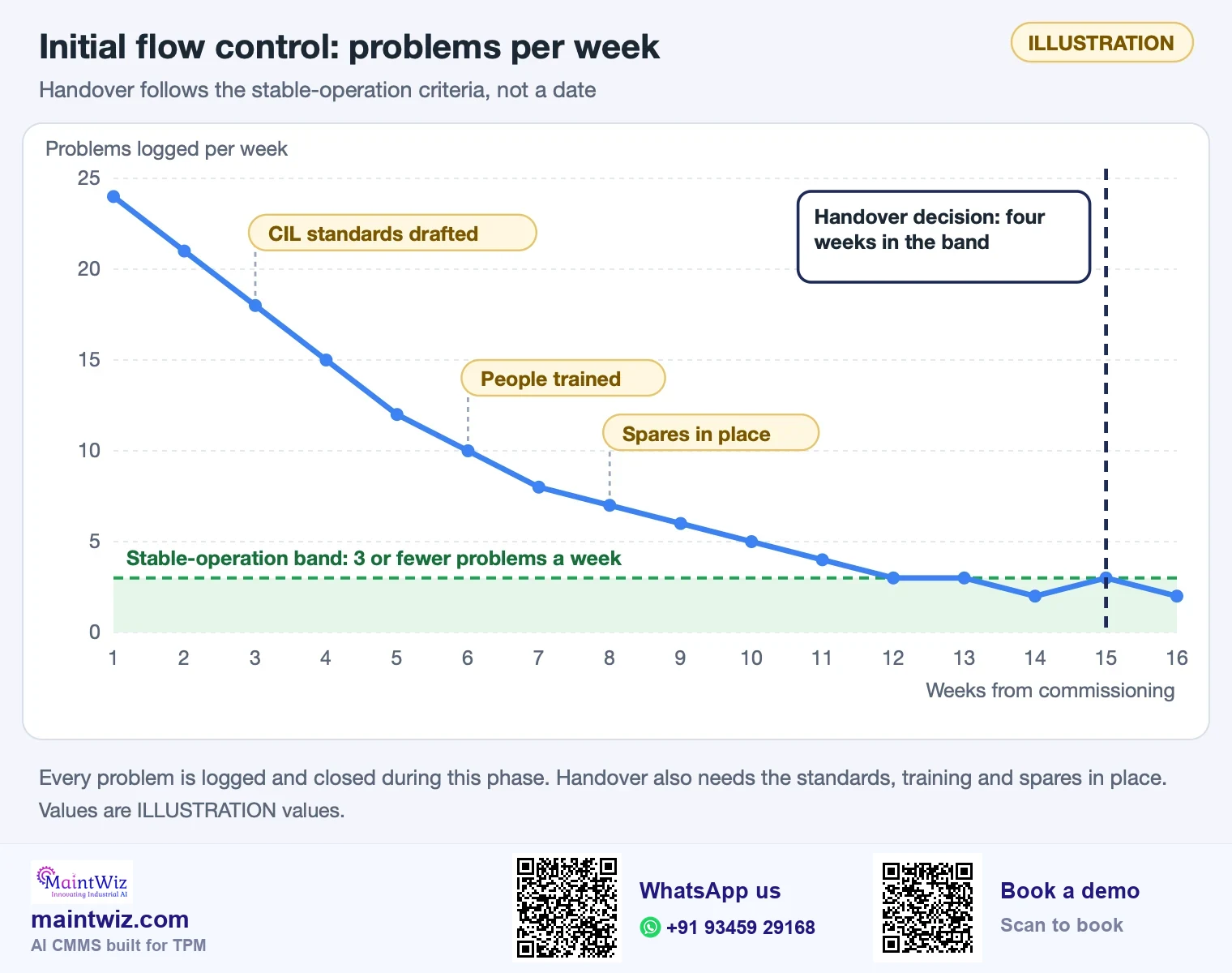
The initial phase after commissioning is when new equipment is least stable. Initial flow control (Shoki Ryudo Kanri), also called initial-phase control or vertical start-up, means treating it as a managed period: log every problem, find root causes, measure start-up losses, finish the CIL and maintenance standards and train people before the equipment is handed over. Handover is a decision against agreed stable-operation criteria, not a date.
Measures
- Time from installation to stable operation, defined by your criteria.
- Number of initial-phase problems and share closed before handover.
- Share of new equipment whose specification cites MP sheets.
- OEE and loss levels in the first months compared with similar existing equipment on the same definitions.
Baseline each measure on your last two projects, so the first project that uses MP sheets shows its own improvement on the same definitions.
Design reviews
What should an EEM design review check?
| Stage | Questions to ask using maintenance lessons |
|---|---|
| Specification | Which known weaknesses of similar equipment must be designed out? Which access, cleaning and lubrication requirements apply? |
| Design review | Can every inspection and lubrication point be reached safely? Where does contamination collect? Which parts will wear first and are they easy to change? |
| Build and factory tests | Do tests cover the weak points found before? Are drawings and parts lists complete? |
| Installation and commissioning | Are standards for cleaning, inspection and lubrication ready before start? Are operators trained? |
| Initial-phase control | What is measured in the first period? How quickly are early failures and defects recorded and fixed? |
Score each answer in the free EEM design review scorecard, with 24 criteria and a Go or Hold decision per phase; the MP sheet module holds the lessons behind each score.
Life-cycle cost thinking
The purchase price is only part of the cost of equipment. Running, maintaining, supplying and disposing of it make up the rest, and design sets the cleaning, lubrication, spare parts and downtime the equipment will need for years. Early equipment management asks designers and buyers to compare options on whole-life cost and on the maintenance burden they create, using records from running equipment; MP sheets supply that history, so the estimate is more than a guess. A common mistake is to value only the capital price because maintenance cost is paid from another budget.
| Question at design review | Where the answer comes from |
|---|---|
| Can operators clean, inspect and lubricate this without tools or climbing? | CIL standards and Jishu Hozen findings on similar equipment |
| Which parts failed most on the equipment this replaces? | Failure history, MP sheets |
| What contamination will this produce, and where does it go? | Contamination sources found at step 2 elsewhere |
| What spares and tools must be on site at start-up? | Planned maintenance history |
Involving suppliers
- Share the specification with maintenance requirements and the MP sheets that apply.
- Ask suppliers about known failure points and recommended spares.
- Agree access, cleaning and inspection requirements in the contract.
- Include operator and maintenance training in the delivery scope.
- Capture lessons from the first months in new MP sheets.
EEM in smaller plants
A plant that buys little new equipment can still use the idea: record the lessons from each repair and modification, review them before buying a replacement or similar equipment and apply them when modifying lines. The MP sheet is a simple record and needs no large project organisation.
Asset record
How does a CMMS hold early equipment management records?
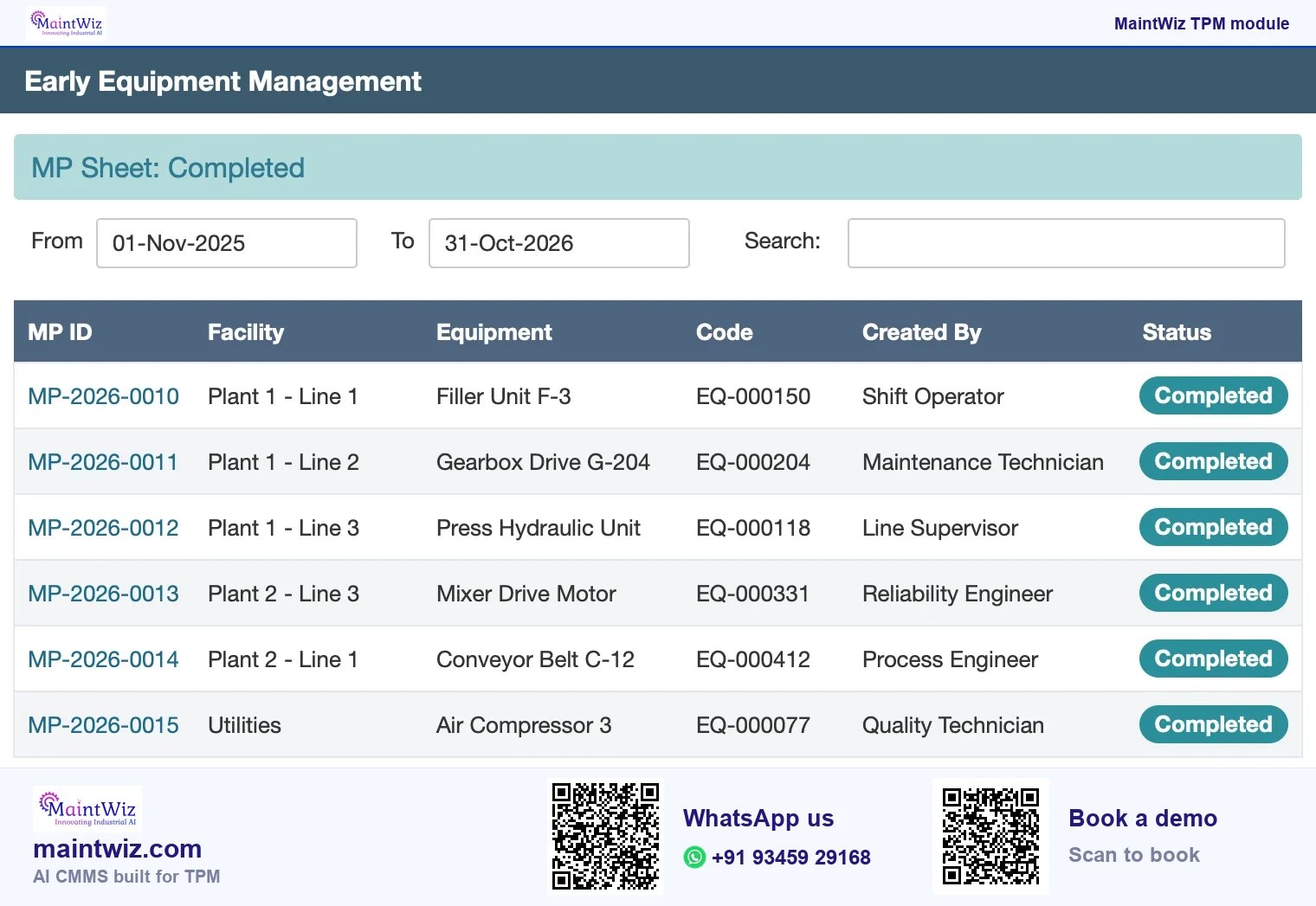
In MaintWiz, the Early Equipment Management module is the MP sheet: sheets are created per facility and equipment, reviewed and completed, and listed by status and date. When new equipment is handed over from commissioning, it joins the facility tree and the equipment list with its group, class and criticality, so the lessons on the MP sheet stay attached to the equipment they came from. The CIL standard drafted during commissioning and the preventive maintenance schedule then run on the same equipment record, and a work order raised against a tag traces back to that record. A lesson learned on one machine is ready for the design review of the next one. Because the MP sheet is part of the equipment record, the design team and the maintenance team read the same history.
EEM software
Software for early equipment management
Software for early equipment management keeps lessons from running equipment ready for the next design review. In MaintWiz, an AI CMMS built for TPM, that is the MP sheet module with entry, reports and a dashboard. Design reviews open the MP sheets listed for the facility and equipment before the specification is frozen, and each sheet exports as a PDF for the design review.
FAQ
Frequently asked questions
What is early equipment management in TPM?
Early equipment management is the TPM pillar that uses maintenance and operating experience from existing equipment in the design, purchase and commissioning of new equipment, so the new equipment is easier to run and maintain and reaches stable operation sooner.
What are the phases of EEM?
The phases run from specification and design review through build and install, then commissioning with initial-phase control, to stable operation and handover. Each phase should have handover checks that capture what the team learned for the next project.
What is an MP sheet?
An MP (maintenance prevention) sheet records a lesson from existing equipment in a form designers can reuse: the theme, problem, cause, classification of the change, target of improvement and the standards to update.
What does EEM stand for?
EEM stands for early equipment management. JIPM names the same pillar Early Management for Product and Equipment Development, Shoki Kanri in Japanese, with a scope that covers new products as well as new equipment.
What is initial-phase control?
Initial-phase control treats the period after commissioning as a managed phase: log every problem, find root causes, measure start-up losses, complete the CIL and maintenance standards and train people before handover. It is sometimes called vertical start-up.
Who takes part in early equipment management?
Design and project engineers, maintenance, operators, quality and purchasing. The point is that people who run and maintain equipment contribute to its specification and design review.
How do you measure early equipment management?
Common measures are time from installation to stable operation on your own criteria, initial-phase problems and the share closed before handover, and the share of new equipment specifications that cite MP sheets. Compare with your own earlier projects.
What is life-cycle cost in early equipment management?
It is the cost of acquiring, operating, maintaining and disposing of equipment over its life. Design decides much of it, so EEM uses maintenance experience to compare options on whole-life cost, not only price.
How does a small plant apply early equipment management?
By recording lessons from repairs and modifications, reviewing them before specifying or buying similar equipment, and using them when changing existing lines. An MP sheet is enough to begin.
What is Shoki Kanri in TPM?
Shoki Kanri is the Japanese name for early management, the TPM pillar also called early equipment management. It applies lessons from running equipment to new equipment and products. JIPM names it Early Management for Product and Equipment Development.
How does MaintWiz support early equipment management?
MaintWiz, an AI CMMS built for TPM, runs early equipment management through MP sheets. Each sheet is raised against a facility and equipment, records the theme, cause category, classification and improvement target, moves from open to completed and exports as a PDF for the design review. MP reports and a dashboard track the sheets.
Sources
Sources
- JIPM, About TPM https://www.jipmglobal.com/about/tpm/
- JIPM, About TPM (pillars) https://jipmglobal.com/tpm/about_us_en