Key takeaways
- Industry 4.0 connects machines, data and people, so maintenance must move from reactive repair to predictive reliability.
- Maintenance software that cannot use real-time sensor data or automate predictive workflows is misaligned with smart factories.
- Ten capabilities define ready software, from predictive maintenance and work orders to mobile access, analytics and multi-site scale.
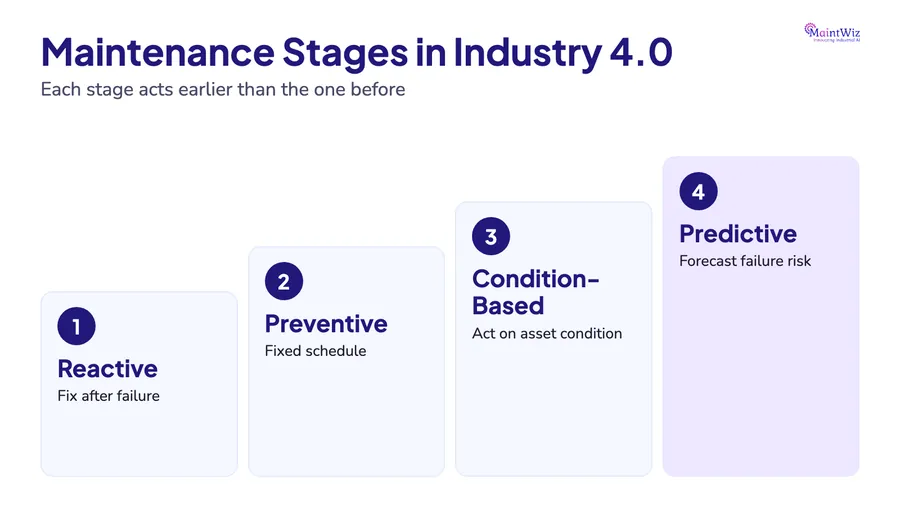
- Most plants move through four stages: reactive, preventive, condition-based, then predictive and prescriptive.
- Moving up the stages starts with a clean asset register and failure codes, then adds condition data on critical assets.
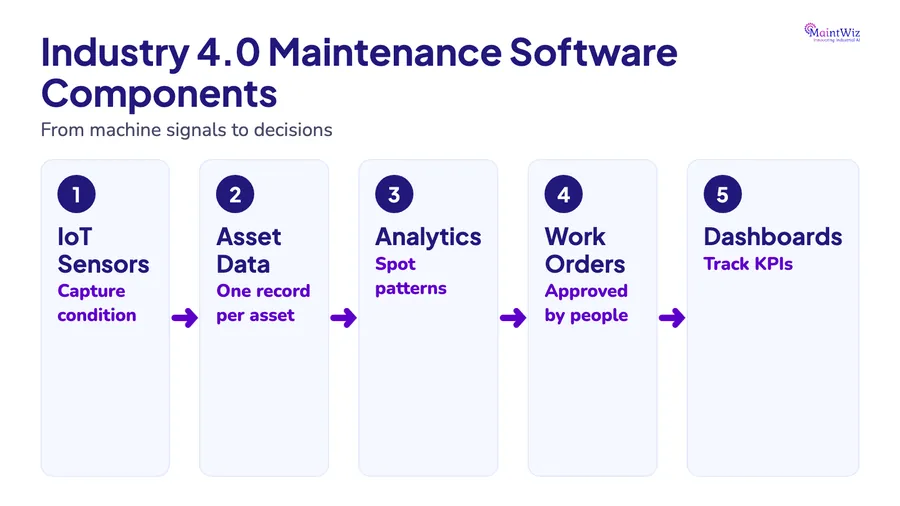
Industry 4.0 maintenance software connects IoT sensor data, predictive analytics, work orders, spare parts and dashboards in one system, so teams act before failures occur. To be Industry 4.0-ready it must ingest real-time data, automate predictive workflows, support mobile technicians and scale across sites. An AI CMMS such as MaintWiz is built for this.
What does Industry 4.0 demand from maintenance software?
Industry 4.0 has fundamentally redefined industrial competitiveness. Smart factories powered by IoT, AI-driven analytics, connected assets, and cyber-physical systems are no longer futuristic concepts—they are operational realities. Yet many organizations continue to rely on outdated Maintenance Software designed for a pre-digital era.
If your Maintenance Software cannot integrate real-time sensor data, automate predictive workflows, optimize spare parts, and provide executive-level analytics dashboards, your maintenance strategy is misaligned with Industry 4.0.
This comprehensive guide explores why Industry 4.0 demands smarter Maintenance Software, what capabilities define next-generation systems, and how forward-thinking organizations are leveraging MaintWiz CMMS to lead digital transformation.
Why must maintenance strategy evolve with Industry 4.0?
Industry 4.0 connects machines, data, and people. Maintenance must evolve from reactive firefighting to predictive reliability engineering.
- Connected Assets Require Intelligent Maintenance Software
- IoT Integration: Sensors generate continuous condition data.
- Real-Time Alerts: Automated triggers replace manual inspection cycles.
- Digital Asset Twins: Centralized asset intelligence for proactive decisions.
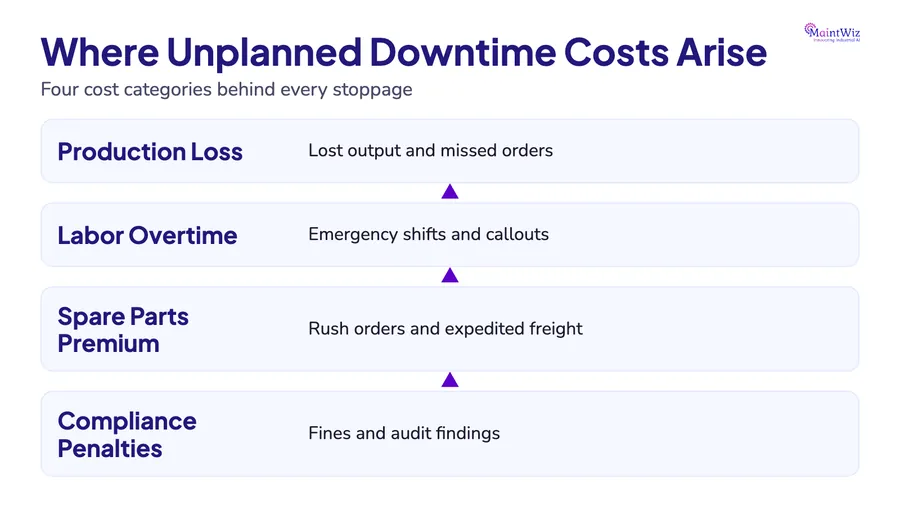
- Downtime Is Now a Board-Level Risk
- Revenue Exposure: Automated production lines magnify failure impact.
- Supply Chain Sensitivity: JIT manufacturing leaves no recovery window.
- Compliance Risk: Auditable maintenance records are mandatory.
- Maintenance Becomes a Profit Lever
- OEE Optimization: Align maintenance with production KPIs.
- Lifecycle Cost Visibility: Data-driven asset replacement planning.
- Workforce Productivity: Mobile-first technician enablement.
Which 10 capabilities must Industry 4.0-ready maintenance software deliver?
- Predictive Maintenance Software
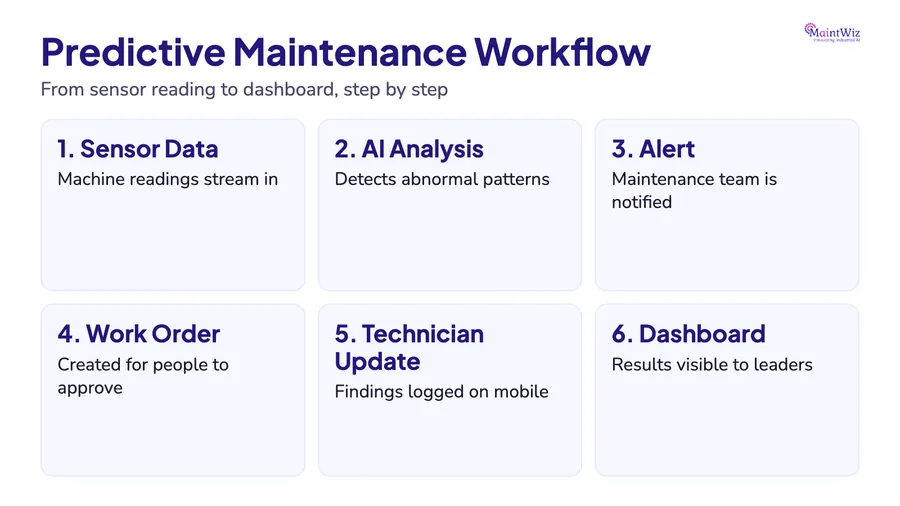
- AI-driven anomaly detection.
- Failure probability modeling.
- Advanced Work Order Management
- Automated prioritization.
- Escalation workflows.
- Asset Management Software Integration
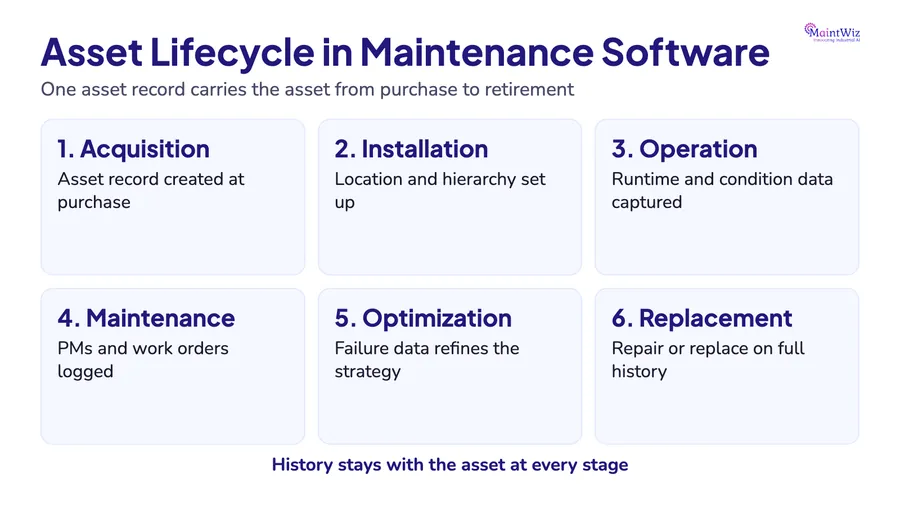
- Complete asset lifecycle management.
- Warranty and depreciation tracking.
- Preventive Maintenance Automation
- Calendar-based scheduling.
- Condition-based triggers.
- Spare Parts Management Optimization
- Auto-reorder levels.
- Inventory turnover analytics.
- Mobile CMMS Accessibility
- Technician mobility.
- Offline data capture.
- Maintenance Analytics Dashboards
- MTBF, MTTR, OEE tracking.
- Trend analysis visualization.
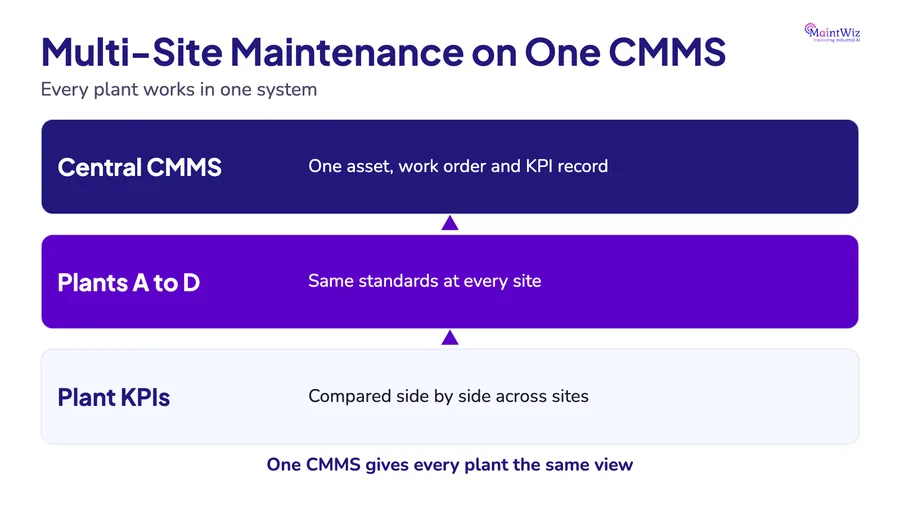
- Multi-Site Scalability
- Centralized governance.
- Localized flexibility.
- ERP & IoT Integration
- Procurement synchronization.
- Real-time data ingestion.
- Cloud-Based Security & Compliance
- Encrypted data storage.
- Audit-ready documentation.
What is the maintenance maturity model in the Industry 4.0 era?
Stage 1: Reactive Maintenance
- Run-to-failure strategy.
- Unpredictable downtime.
Stage 2: Preventive Maintenance
- Scheduled inspections.
- Reduced breakdown frequency.
Stage 3: Condition-Based Maintenance
- Sensor-triggered actions.
- Data-driven decision-making.
Stage 4: Predictive & Prescriptive Maintenance
- AI-powered forecasting.
- Strategic reliability alignment.
How do you move from one maturity stage to the next?
- Clean the asset register and set failure codes, so every breakdown is recorded the same way.
- Base PM on asset criticality and failure history instead of the calendar alone.
- On critical assets, add condition data such as vibration, temperature or oil analysis and trigger work orders from set limits.
- Feed work order outcomes back into the failure history so predictions improve over time.
What is the ROI of smart maintenance software?
- 30–50% Downtime Reduction
- 20–30% Maintenance Cost Savings
- 15–25% Asset Life Extension
- Higher Technician Productivity
- Improved Safety & Compliance
Smart maintenance software is now a planning tool for reliability and cost, not only a record of completed work.
Why choose MaintWiz AI CMMS for Industry 4.0?
MaintWiz CMMS is purpose-built for Industry 4.0. It combines deep domain expertise with digital innovation to deliver a powerful Maintenance Management System.
- CMMS Software: Centralized maintenance governance.
- Preventive Maintenance Software: Automated scheduling.
- Asset Management Software: Lifecycle visibility.
- Spare Parts Management: Inventory optimization.
- Mobile CMMS: Technician empowerment.
- Maintenance Analytics: Executive dashboards.
- Work Order Management: Automated workflows.
- Predictive Maintenance Software: AI-enabled reliability.
MaintWiz helps maintenance teams move from reactive repairs to predictive, planned work.
FAQs
What is Industry 4.0 maintenance?
Industry 4.0 maintenance uses connected sensors, real-time data, analytics and AI to plan work from asset condition instead of fixed schedules or breakdowns. It links maintenance with production data and moves the team from reactive repair to predictive reliability.
What makes maintenance software Industry 4.0-ready?
It integrates real-time sensor and ERP data, automates predictive workflows, prioritizes and escalates work orders, supports mobile technicians, tracks MTBF, MTTR and OEE, scales across sites and keeps audit-ready records in a secure cloud.
Do I need IoT sensors to start with predictive maintenance?
Not on every asset. Start with a clean asset register, criticality-based preventive maintenance and reliable failure history. Then add sensors to critical assets, where condition data justifies the effort, and trigger work orders from them.
How does predictive maintenance work with a CMMS?
Sensor data is analyzed for anomalies and failure risk. When a limit is crossed, the CMMS creates a work order, assigns it, tracks the spare parts and records the outcome, which closes the loop from alert to repair.
How long does it take to go live with MaintWiz?
MaintWiz go-live takes 4 to 6 weeks. Customer success managers guide onboarding, and your asset register and PM schedules load from Excel uploads.